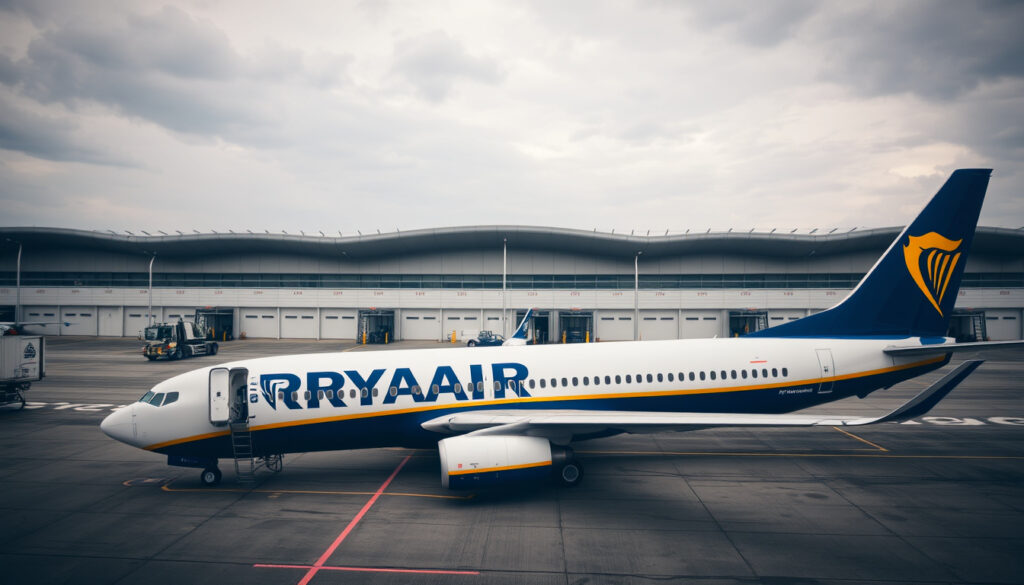
Ryanair Spanish Flights Cuts: 1.2M Seats Cut in 2026
Ryanair has announced its steepest regional cuts in years, removing 1.2 million seats from routes to northern Spain for Summer 2026 while redirecting aircraft to bigger hubs. The budget carrier cites airport fees set by Spain’s state-run operator Aena as the reason—too expensive to justify regional growth. Complete base closures at Asturias and Vigo reshape travel for the region.
Seat cuts to Spain: 1.2 million ·
Capacity reduction: 10% ·
Primary cause: Aena fee increases ·
Key closures: Asturias, Vigo bases ·
Implementation: Summer 2026
Quick snapshot
- 1.2 million seats cut from Summer 2026 regional Spain schedule (Ryanair Corporate)
- All flights to/from Asturias Airport discontinued as of March 31, 2026 (Ryanair Corporate)
- Ryanair bases at Asturias and Vigo shutting down completely (Travel and Tour World)
- Exact scope of fee hike: reported figures range from 7% to 21% depending on source and airport category
- Whether Ryanair will restore cut routes if Aena reverses course before 2027
- Whether competitors will fully absorb displaced passenger demand at regional airports
- October 2025: Ryanair announces cuts and Asturias closure date (Ryanair Corporate)
- Late 2025: Aena confirms fee increases taking effect 2027 (Ryanair Corporate)
- March 2026: Asturias base and all routes officially cease (Ryanair Corporate)
- Summer 2026: Full 1.2 million seat reduction implemented (Ryanair Corporate)
- Capacity shifting to Madrid, Barcelona, Malaga, and Palma hubs (Ryanair Corporate)
- New routes opening in Italy, Morocco, Croatia, Sweden, Hungary to replace displaced aircraft (Ryanair Corporate)
- Rising fares expected at regional airports as competition decreases (Ryanair Corporate)
Ryanair’s regional Spain operations have faced escalating cuts over the past year, with the airline dismantling its presence at smaller Spanish airports while consolidating at major hubs.
| Detail | Data point |
|---|---|
| Total Spanish seat cuts (Summer 2026) | 1.2 million |
| Percentage reduction | 10% |
| Aena fee increase (regional airports) | 7% |
| Fee increase per passenger | €0.30 |
| Asturias Airport status | All Ryanair flights closed |
| Announcement date | October 8, 2025 |
| Winter 2025 prior cuts | 1 million seats |
| Ryanair growth proposal (rejected) | 40% traffic increase to 77M by 2030 |
Which routes are Ryanair cutting?
Ryanair’s announced reductions hit Spain’s regional airports hardest, with complete base closures at Asturias and Vigo, and significant scaling back at Santiago de Compostela and Santander. The cuts follow a 1 million seat reduction already implemented for Winter 2025, meaning regional Spain has lost more than 2 million Ryanair seats in under a year.
Spanish hotspots affected
Northern Spain bears the brunt of the reductions. Asturias Airport loses all Ryanair service from March 31, 2026, marking one of the most complete route eliminations in the airline’s European network. Vigo follows with full base closure. At Santiago de Compostela, Ryanair is shutting down its entire operational base rather than merely reducing frequencies. Santander faces scaled-back operations without full closure.
- Asturias Airport: 100% Ryanair service eliminated
- Vigo Airport: All Ryanair flights discontinued
- Santiago de Compostela: Base closure, operations cease
- Santander: Capacity reduced significantly
- Zaragoza: Capacity reductions
- Canary Islands: Routes scaled back
Other European cuts
Spain’s reductions form part of a wider European pullback. Portugal loses all six Azores routes by March 31, 2026. France sees 25 routes cut, while Germany and Belgium face similar reductions. Spain represents the largest single-country impact in terms of absolute seat numbers.
Major hubs—Madrid, Barcelona, Palma de Mallorca, and Malaga—see no service cuts and will actually receive additional flights as Ryanair redirects aircraft from closed regional bases. The airline remains Spain’s number-one carrier but is actively shrinking its presence outside major airports.
The pattern here is clear: Ryanair is abandoning regional airports to protect margins at its hubstrongholds, betting that passengers will travel longer distances rather than switch carriers.
Why is Ryanair cutting flights to Spain?
The dispute centers on Aena, Spain’s state-run airport operator, which controls virtually all commercial airports in the country. Ryanair accuses Aena and the Spanish government of implementing fee increases that make regional airports economically unviable for budget carriers operating on thin margins.
High airport fees dispute
Ryanair CEO Michael O’Leary has called the planned fee increases the highest in over a decade, harming regional traffic growth. According to Ryanair’s statements, Aena plans a 7% increase for regional airports—marking the steepest annual rise in more than ten years. Aena executive Maurici Lucena disputes the characterization, stating the actual increase amounts to approximately €0.30 per passenger at regional airports, with tiered pricing offering lower rates for smaller facilities.
Ryanair Group CEO Michael O’Leary “Aena and its major shareholder, the Spanish government, continue to harm regional traffic growth, tourism and jobs in Spain through high airport fees and unjustified price increases.” Aviation Week
Government blame
Ryanair directly attributes the cuts to government policy failures. The airline’s official statement specifically criticizes the Spanish government and Minister Bustinduy for failing to intervene against what Ryanair characterizes as Aena’s monopoly pricing and “illegal bag fines.” Aena and the Ministry maintain that Spanish airport tariffs remain competitive within Europe and have refused to offer special terms for Ryanair.
The airline proposed a 40% traffic increase plan that would have seen Ryanair carry 77 million passengers annually by 2030, contingent on reasonable fee structures. Ryanair claims Aena ignored these proposals, prompting the airline to shift that growth capacity elsewhere—to Italy, Morocco, Croatia, Sweden, and Hungary.
Aena’s position is that €0.30 per passenger represents minimal impact on ticket prices, while supporting infrastructure investment. Ryanair counters that even small per-passenger increases compound across millions of travelers and make regional routes unprofitable when competing against airports in Poland, Morocco, and Italy.
The implication is that without policy intervention, regional Spanish airports will continue losing budget options as Ryanair redirects capacity to more cost-competitive markets.
What is the impact of Ryanair’s 2026 flight reductions?
The practical effect for travelers is straightforward: fewer flights, less competition, and likely higher fares at affected airports. Regional Spanish airports will lose their dominant carrier at a time when alternative options are limited.
Summer travel challenges
Summer 2026 marks the first peak season where the full scope of cuts takes effect. The 1.2 million seat reduction means travelers to Asturias, Vigo, and other regional destinations face significantly fewer booking options. Competitors including Vueling, Iberia, and Wizz Air are expected to fill some gaps, but analysts note these carriers may not fully absorb displaced demand or match Ryanair’s low-fare pricing.
1.2 million seat cuts
Ryanair will reduce its Summer 2026 schedule to Regional Spain by 1.2 million seats, representing a 10% capacity cut. Combined with the 1 million seats already removed for Winter 2025, regional Spain has lost approximately 2.2 million Ryanair seats in under twelve months. Ryanair warns that airfares will rise at regional airports as competition decreases and operating costs increase.
The consequence is immediate: passengers at closed airports must either travel farther to major hubs or pay premium fares on thinner routes with fewer competitors.
What Ryanair rule changes affect passengers?
Beyond route cuts, Ryanair has maintained several operational policies that affect passengers planning travel. These include check-in timing requirements and baggage rules that differ from many competitors.
40 minute rule
There is no official Ryanair “40 minute rule.” Ryanair requires passengers to check in online within two hours of departure for flights without checked bags, and four hours before departure for flights with checked luggage. This strict window differs from competitors who allow 24-hour advance check-in and has caught unaware travelers off guard.
Check-in bag timing
For passengers with checked bags, Ryanair mandates check-in completion at least two hours before departure. Online check-in opens 60 days before departure for non-prepaid bags and 24 hours before for those who have already purchased baggage allowance. Passengers failing to meet these windows risk losing their reservation or incurring rebooking fees.
As Ryanair reduces European operations, passengers should anticipate potential service changes beyond route cuts. The airline has already indicated further reductions possible in 2027 if airport fee disputes continue unresolved. Travelers holding flexible tickets or reward bookings should monitor for schedule adjustments.
The pattern shows Ryanair’s check-in policy favors passengers traveling light—if you have a checked bag, you lose flexibility and must check in hours earlier than many competitors require.
What are Ryanair’s baggage and seating rules?
Understanding Ryanair’s baggage policy prevents surprises at the gate. The rules have evolved over time but maintain specific restrictions that differ from legacy carriers.
Hand luggage policy
Ryanair allows one small personal bag (max 40cm x 20cm x 25cm) included with every fare. A second larger cabin bag (up to 10kg) requires prepaid priority boarding. Travel experts frequently note that a standard handbag or laptop bag qualifies as the included personal item. Larger bags must be checked or purchased with priority status.
Liquids and restrictions
Like all EU carriers, Ryanair adheres to the 100ml liquid rule for cabin baggage. All liquids must fit in individual containers not exceeding 100ml, stored in a single transparent resealable bag of approximately one liter capacity per passenger. Exceptions exist for essential medical liquids and baby food.
Seat selection considerations
Seat selection is optional but carries fees for most passengers. Exit row seats offer additional legroom at premium pricing. Some frequent travelers have noted that row 11 and nearby positions sometimes experience temperature variations or proximity to lavatories—practical considerations for longer flights.
Ryanair’s baggage and seating policies generally favor passengers who pack light and don’t require flexibility. Those with larger carry-on items or specific seating needs should calculate total costs carefully—a priority boarding pass with included checked bag may prove more economical than standard fare plus additional services.
The implication is that flying Ryanair cheaply requires careful planning: passengers who forget to factor in baggage and seating fees often pay far more than expected.
Timeline of Ryanair’s Spanish cuts
Three announcements over six months reveal an escalating dispute between Ryanair and Aena, with no apparent resolution pathway.
| Date | Event |
|---|---|
| Winter 2025 (December) | Ryanair cuts 1 million seats from regional Spain operations |
| October 8, 2025 | Ryanair announces 1.2 million additional seat cuts and Asturias closure |
| Late 2025 | Aena confirms fee increases taking effect in 2027 |
| February 23, 2026 | Ryanair issues new warning about rising airfares due to Aena hikes |
| March 31, 2026 | Asturias, Vigo, and Azores routes officially cease operations |
| Summer 2026 | Full 1.2 million seat reduction takes effect for peak season |
| 2027 | Aena fee increases formally begin |
What we know versus what remains unclear
Confirmed
- 1.2 million seat cuts to regional Spain (Summer 2026)
- 10% capacity reduction for regional Spanish airports
- Full closure of Ryanair bases at Asturias and Vigo
- Announcement made October 8, 2025
- Ryanair shifting capacity to hubs and international markets
- Airfares expected to rise at regional airports
- Aena fee increases scheduled for 2027 implementation
- Ryanair is Spain’s number-one airline by passenger volume
Unconfirmed
- Precise percentage of Aena fee increase—figures range from 7% to 21%
- Whether specific additional routes beyond major bases are affected
- Whether government will intervene before 2027 fee implementation
- If competitors fully substitute Ryanair capacity at affected airports
- Whether Ryanair will restore routes if Aena reverses course
- Exact financial impact on regional Spanish tourism and employment
Key voices in the dispute
Michael O’Leary, Ryanair Group CEO “Aena and its major shareholder, the Spanish government, continue to harm regional traffic growth, tourism and jobs in Spain through high airport fees and unjustified price increases.” Aviation Week
Maurici Lucena, Aena Executive The increase in charges cited by Ryanair amounts to “approximately €0.30 [$0.35] per passenger,” with tiered pricing offering lower rates at smaller regional airports. Aviation Week
Ryanair Official Statement “Ryanair will reduce its Summer 2026 schedule to Regional Spain by 1.2m seats (-10%).” Ryanair Corporate
Summary
Ryanair’s decision to cut 1.2 million seats from regional Spain represents the most significant contraction in the airline’s Spanish operations in years. The cuts disproportionately affect smaller airports in northern Spain—particularly Asturias and Vigo—while leaving major hubs untouched. This geographic split reflects Ryanair’s strategy of consolidating at larger airports where fee structures remain more manageable, while redirecting growth capacity to Italy, Morocco, and other markets. The dispute hinges on fundamentally different interpretations of Aena’s fee increases: Ryanair sees unsustainable cost pressures, while Aena frames the changes as modest and competitively positioned within Europe. For travelers planning summer 2026 trips to affected regions, the practical implications are clear: fewer options, higher prices, and a shrinking roster of competitors. Regional Spanish airports face an uncertain future without their dominant budget carrier, and the Spanish government’s response—or lack thereof—will likely determine whether these cuts become permanent.
The bottom line is that Ryanair has made its position clear: until Aena restrains fee hikes, regional Spanish airports will remain sidelined in favor of more profitable routes elsewhere.
Related reading: EasyJet customer service · TUI BLUE Sensatori Biomar reviews
en.politis.com.cy, travelandtourworld.com, majorcadailybulletin.com, euroweeklynews.com
Ryanair’s Spanish cuts mirror its Billund base closure over tax earlier this year, where high taxes prompted a full base shutdown and route cancellations.
Frequently asked questions
When do Ryanair’s Spanish flight cuts start?
The most significant cuts take effect for Summer 2026 (starting around June 2026), with complete base closures at Asturias and Vigo occurring on March 31, 2026.
Which Spanish airports lose most flights?
Asturias Airport loses all Ryanair service entirely. Vigo Airport sees complete flight termination. Santiago de Compostela and Santander face significant reductions. Major hubs like Madrid, Barcelona, and Malaga are unaffected and may gain additional routes.
Are there alternatives to Ryanair for Spain?
Yes. Vueling (Iberia Group), Iberia, and Wizz Air are expected to expand at affected airports. However, these carriers generally offer fewer budget options and may charge higher fares than Ryanair’s typical low-cost model.
How do airport fees affect ticket prices?
Aena’s fee increases, estimated at €0.30 per passenger, contribute to rising operating costs that Ryanair says make regional routes unprofitable. The airline has warned that airfares will rise at affected airports as competition decreases.
Will Ryanair restore cut routes?
Ryanair has not ruled out restoration if Aena reverses its fee increases before 2027. However, the airline is actively shifting capacity to other European markets, making reinstatement uncertain without significant policy changes.
What other countries face Ryanair cuts?
Spain joins Portugal (all Azores routes discontinued), France (25 routes cut), Germany, Belgium, and other European nations in facing Ryanair capacity reductions due to rising airport fees and operational costs.
How to book Ryanair flights amid changes?
Travelers should verify specific route availability before booking. Checking alternative carriers for regional airport routes and booking early for Summer 2026 travel to affected destinations is recommended given reduced capacity.
More related posts
 Chris Pratt: Biography, Net Worth, Controversies & Family
 Nearest A&E: Costs, Wait Times & How to Get Seen Faster
 Peter Jones Net Worth, Biography, and Dragons’ Den Success
 Houses for Sale Bedford – 3 Bed Detached Prices and Listings
 Ji-young Yoo – Movies and TV Shows Age and Height
 Hair Transplant Before and After – Real Results and Recovery Timelines
 Spencer Lofranco, Gotti and Jamesy Boy Star, Dies at 33
 Bed Bug: Signs, Causes, and How to Get Rid of Them
