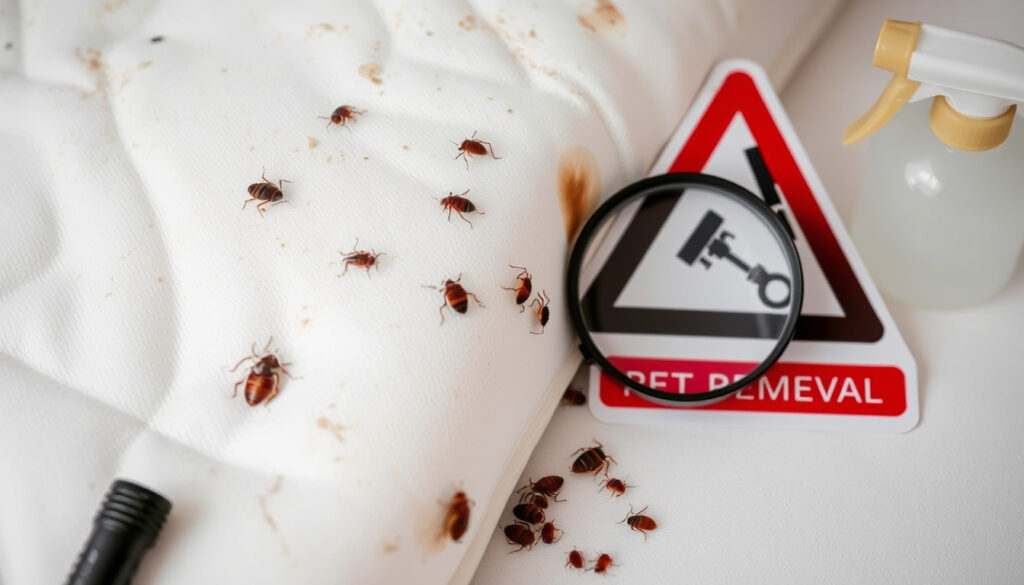
Bed Bugs: Signs, Causes, and How to Get Rid of Them
There’s a reason bed bugs make people’s skin crawl — literally. These tiny, nocturnal insects feed on human blood while you sleep, leaving itchy welts that can last for days. But here’s a fact that might surprise you: bed bugs are not a sign of poor hygiene.
Adult bed bug size: 4–5 mm (apple seed size) · Eggs laid per female: 200–500 in a lifetime · Survival without feeding: Several months under cool conditions · Bite reaction timeframe: Itching may appear 1–9 days after bite
Quick snapshot
- Whether bed bugs prefer certain blood types
- Effectiveness of ultrasonic repellents (no evidence)
- Long-term health effects of repeated exposure (beyond allergy)
- Whether bed bugs can develop resistance to common pesticides
- Confirm infestation with physical evidence, not bites alone (U.S. EPA)
- Implement integrated pest management (IPM) — combine heat, vacuum, sealing, and pesticides (U.S. EPA)
- Prevent re-infestation by inspecting secondhand furniture and using luggage racks in hotels (U.S. EPA)
Five key characteristics define the bed bug — a pattern worth knowing before you start treatment.
| Attribute | Value |
|---|---|
| Scientific name | Cimex lectularius |
| Adult size | 4–5 mm (apple seed) |
| Color | Reddish-brown after feeding, pale before |
| Life cycle | Egg → nymph (5 molts) → adult; ~5 weeks at room temperature |
| Feeding frequency | Every 5–10 days; can survive months without feeding |
| Preferred hideouts | Mattress seams, headboard cracks, furniture joints |
| Bite reaction | Itching may appear 1–9 days after bite; some people show no reaction |
What are the first signs of bed bugs?
Early detection is everything. The U.S. Environmental Protection Agency (EPA) pest guide lists four reliable signs: live bugs, shed skins, rusty or red-brown spots on bedding, and tiny eggs. Bite marks alone are not a reliable indicator — the EPA explicitly warns that skin reactions vary widely by person.
What do bed bug bites look like?
- Bites often appear in a line or cluster, according to WebMD
- They are small, red, and itchy — similar to mosquito bites
- Some people develop welts or blisters
Bite patterns vary so much that relying on them alone leads to false positives. The only sure confirmation is finding a live bug or its physical evidence.
How to identify bed bugs on a mattress?
- Check mattress seams, tags, and tufts for live bugs or eggs
- Look for dark fecal spots (digested blood) on sheets and mattress covers
- Inspect the headboard and bed frame, especially cracks and crevices
- Use a flashlight and a credit card to scrape seams
The Centers for Disease Control and Prevention (CDC) confirms that the best way to confirm an infestation is to collect adults or nymphs from sheltered areas near where the person was bitten.
What this means: Don’t guess based on bites. Grab a flashlight and look for the physical evidence — that’s the only way to be sure.
What causes you to get bed bugs?
Bed bugs are hitchhikers, not a punishment for poor housekeeping. The NHS 111 Wales states clearly that bed bugs are found in both clean and dirty places. They travel via luggage, used furniture, clothing, and even library books. Clutter gives them hiding spots but does not attract them — blood does.
Are bed bugs due to poor hygiene?
- No. Cleanliness does not prevent or attract bed bugs
- Regular cleaning helps spot them early, but does not stop an infestation
- Anyone can get bed bugs — from five-star hotels to immaculate apartments
The U.S. EPA advises inspecting surrounding living spaces as well as the infested area to determine the extent of the infestation.
The pattern: Bed bugs are equal-opportunity pests. The stigma is unwarranted, and the focus should be on detection and treatment, not shame.
What do you do if you find a bed bug?
Don’t panic. Isolate the area and confirm the pest. The EPA’s DIY guide recommends a multi-step process that starts with identification and ends with prevention.
What kills bedbugs instantly?
- Heat: Dry bedding and clothing at high temperature for 30 minutes kills them (U.S. EPA)
- Steam: Direct steam at 120°F (49°C) for 90 minutes kills eggs
- Cold: Freezing below 0°F (-19°C) for at least 4 days can eliminate infestations (U.S. EPA)
- Chemical sprays: Slower but effective when used with EPA-registered products
Heat is the only method that kills all life stages instantly. Chemicals take time and may not kill eggs, requiring repeat treatments.
Can I still sleep in my bed with bed bugs?
You can, but it’s not ideal. The EPA recommends using mattress, box spring, and pillow encasements to trap bed bugs while you treat. If possible, move to another room until the infestation is under control.
How to sleep at night after a bed bug problem?
- Wash bedding at 60°C (140°F) and tumble dry on hot for 30 minutes (NHS 111 Wales)
- Use encasements on mattress and box spring
- Place bed bug interceptors under bed legs
- Keep bed away from walls and furniture
The trade-off: Sleeping in the same room slows treatment. The safer route is to sleep elsewhere while the infested area is treated with heat or chemicals.
How to get rid of bed bugs?
Integrated Pest Management (IPM) is the gold standard. The CDC and U.S. EPA joint statement recommends combining monitoring, clutter reduction, sealing cracks, heat treatment, vacuuming, and judicious pesticide use.
Six steps, one approach: IPM treats the infestation as a system, not a single bug.
| Step | Action | Source |
|---|---|---|
| 1 | Identify the problem by finding live bugs or evidence | U.S. EPA |
| 2 | Reduce clutter to eliminate hiding spots | CDC / joint statement |
| 3 | Seal cracks and crevices with silicone caulk | U.S. EPA |
| 4 | Apply heat (steam, dryer) or cold treatment | U.S. EPA |
| 5 | Use EPA-registered pesticides labeled for bed bugs | U.S. EPA |
| 6 | Inspect every 7 days and re-treat if needed | U.S. EPA |
What are cost-effective control methods?
- Diatomaceous earth (food grade) — non-toxic, but slow
- Mattress encasements — trap bugs and prevent bites
- Bed bug interceptors — monitor and catch crawling bugs
- DIY steam cleaners — kill on contact
The EPA notes that encasements and interceptors are effective monitoring tools that help confirm eradication.
How to prevent bed bugs?
- Inspect secondhand furniture before bringing it home
- Use luggage racks in hotels — keep bags off the floor
- Wash and dry travel clothes on high heat immediately after returning
- Seal cracks in walls and baseboards
Why this matters: Prevention is cheaper and less stressful than treatment. A single infested piece of furniture can cost hundreds in professional extermination.
Six key specifications for bed bug treatment — one pattern: heat is the most reliable tool, but it must be sustained long enough to kill eggs.
| Parameter | Specification | Source |
|---|---|---|
| Heat kill temperature | ≥120°F (49°C) for 90 minutes | U.S. EPA |
| Cold kill temperature | ≤0°F (-19°C) for 4 days | U.S. EPA |
| Dryer time | 30 minutes on high heat | U.S. EPA |
| Wash temperature | 60°C (140°F) | NHS 111 Wales |
| Inspection interval | Every 7 days after treatment | U.S. EPA |
| Pesticide requirement | EPA-registered, labeled for bed bugs | U.S. EPA |
Is bed bug harmful to humans?
Bed bugs are not known to transmit diseases, according to the CDC. However, their bites can cause itching, allergic reactions, and secondary infections from scratching. Severe infestations can lead to sleep deprivation and anxiety. Rare cases of anaphylaxis have been reported.
- Bites: itchy welts, sometimes in lines or clusters
- Allergic reactions: range from mild to severe (rare)
- Secondary infections: from scratching open wounds
- Psychological impact: anxiety, insomnia, stress
WebMD notes that some people show no reaction at all, making it easy to miss an infestation.
The implication: While bed bugs are not a disease vector, the health burden is real — especially for mental health. Treating the infestation is also treating the anxiety.
Confirmed facts vs. What’s unclear
Confirmed facts
- Bed bugs feed on human blood (CDC)
- Bites cause itching and welts (WebMD)
- Heat above 120°F (49°C) kills all life stages (U.S. EPA)
- They do not transmit diseases
What’s unclear
- Whether bed bugs prefer certain blood types
- Effectiveness of ultrasonic repellents (no evidence)
- Long-term health effects of repeated exposure (beyond allergy)
- Whether bed bugs can develop resistance to common pesticides
Bed bugs are not known to spread diseases.
— CDC – About Bed Bugs
Look for rust-colored spots, shed skins, and live bugs.
Bites often appear in a line or cluster.
— WebMD – Bedbugs
For the average homeowner, the choice is clear: treat bed bugs immediately with integrated pest management, or risk an infestation that disrupts sleep and costs thousands in professional extermination. The data-backed path is heat, encasements, and persistence — not panic or shame.
epa.gov, my.clevelandclinic.org, archive.epa.gov, epa.gov, michigan.gov, archive.epa.gov, igamingindustry.org
A comprehensive bed bug guide from a reputable source can help demystify the process of eliminating these pests.
Frequently asked questions
Can bed bugs fly?
No, bed bugs do not have wings and cannot fly. They crawl or hitchhike on luggage and clothing.
Do bed bugs only live in beds?
No, they hide in cracks, furniture, baseboards, and even electrical outlets — anywhere within a few feet of their host.
How long can bed bugs live without food?
Adults can survive several months without feeding, especially in cool conditions. Nymphs need blood to molt.
What is the best way to treat bed bug bites?
Wash the area with soap and water, apply a cold compress, and use over-the-counter antihistamines or corticosteroid creams for itching. Avoid scratching to prevent infection.
Are bed bugs visible to the naked eye?
Yes, adults are about the size of an apple seed and visible. Nymphs are smaller but still visible with good light.
Can bed bugs infest a clean house?
Absolutely. Cleanliness does not prevent bed bugs — they are attracted to blood, not dirt. Regular cleaning helps spot them early.
How do I know if I have bed bugs or fleas?
Bed bugs usually bite in lines or clusters on exposed skin while you sleep. Fleas bite randomly, often around ankles. Look for bed bug evidence (fecal spots, shed skins) near the bed.
Do I need to throw away my mattress if I have bed bugs?
No, you can treat a mattress with heat, encasements, and vacuuming. Throwing it away may spread the infestation to other rooms.
More related posts
 Sidney Crosby: Wife, Kids, Net Worth & Career Stats (2025)
 Richard Speck: Verified Facts, Myths, and Unclear Details
 Tomasz Schafernaker: Biography, Artwork, Salary & Facts
 Marina Abramović: Biography, Art, and the Ulay Lawsuit
 Mariah Carey: Bipolar Disorder, Kids, Vocal Nodules
 Mr. Incredible: Voice Actor, Powers, and Character Profile
 The Bombing of Pan Am 103 – Lockerbie Facts and Timeline
