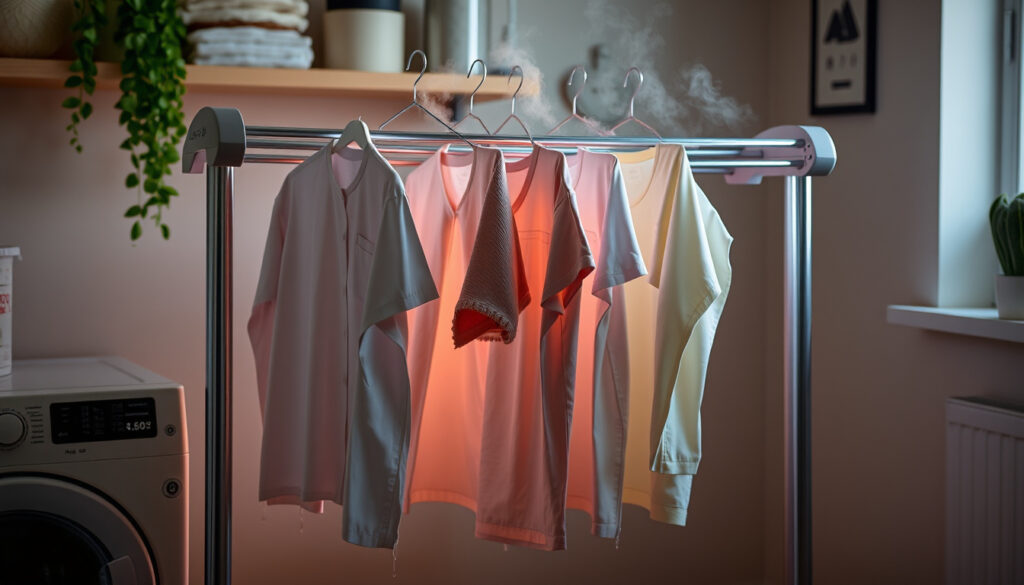
Aldi Heated Clothes Airer: Price, Review & Running Costs
Anyone who’s watched a tumble dryer eat through £1 in electricity knows that feeling—the quiet dread of the quarterly bill arriving. The Aldi heated clothes airer promises something different: warm, steady drying without the astronomical cost of a conventional dryer. It’s sold out fast every time it appears in stores, which tells its own story. So what actually happens when you bring one home, run it for a week, and compare the meter readings?
Running cost per hour: 9p ·
Typical price: £69.99 ·
Wattage: 325W ·
Drying capacity: 4 loads ·
Cable length: 1.4m
Quick snapshot
- Sells for £34.99–£79.99 depending on model (Woman & Home review)
- Costs 9p per hour to run (Woman & Home review)
- Ambiano model has 18 heated bars with 12m of drying space (Woman & Home review)
- Exact drying times vary by load size and fabric type
- Overnight safety guidance not published for all models
- Precise Ireland electricity rates for 2026
- UK energy price cap set at 24.67p/kWh from April 2026 (Uswitch energy guide)
- Aldi Ireland selling heated airers as winter specials (Uswitch energy guide)
- SpecialBuys releases tend to sell out within days
- Higher-end £79.99 model includes 1-24 hour timer
The table below consolidates the key specifications from official product listings and verified reviews.
| Specification | Value |
|---|---|
| Price range | £34.99 – £79.99 |
| Running cost | 9p per hour |
| Power usage | 325W |
| Heated bars | 18 (Ambiano standard) |
| Drying space | 12m |
| Weight capacity | 16kg |
| Availability | In-store SpecialBuys |
| Cable length | 1.4m |
| Voltage | 220–240V |
Is the Aldi heated airer any good?
The Aldi Ambiano heated airer has earned a reputation as a surprisingly solid budget buy. Testing by Woman & Home (a UK home interests publication with decades of product testing) found it “a brilliant budget option” that feels robust, compacts down to a slim frame, and warms up quickly.
User reviews and tests
Real-world testing backs up the positive assessment. A consumer testing channel on YouTube measured the Aldi Upright Airer consuming 1.7 kWh over 5 hours, which worked out to 37.5p at a 22.6p/kWh tariff. One Boards.ie user (an Irish community forum) called it “very basic, but you get the same as models twice the price.” The Irish Post (an Irish English-language publication) called Aldi’s heated airers “an absolute bargain” for winter.
The caveat: some users report that heated airers don’t circulate warm air as effectively as a proper dryer. For thick items like jeans or towels, you may need to rotate clothes midway through a drying cycle.
Performance compared to expectations
At the standard Ambiano price of £34.99, the performance is considered excellent value. The higher-end model at £79.99 adds a 1-24 hour timer and operates at 50°C, but the drying space remains similar at 12m. For most households doing regular laundry, the cheaper version delivers the essential benefits.
The implication: the Aldi heated airer earns its reputation not through flashy features but through delivering reliable, low-cost drying at a price that won’t make you flinch.
How much does an Aldi heated airer cost to run?
Running costs are the Aldi heated airer’s strongest selling point. According to Uswitch (the UK’s largest energy comparison platform), a 300W heated airer costs approximately 7p per hour under the April 2026 UK price cap of 24.67p/kWh. Woman & Home’s testing pegged the Aldi at 9p per hour.
Hourly electricity cost
Doing the math: running the airer for 5 hours costs roughly 35–45p. A typical tumble dryer cycle, by contrast, uses 3kWh and costs around 74p per load, according to Uswitch. That’s roughly 10 times more energy per cycle. Beko Ireland (a major appliance manufacturer) notes that heated clothes rails cost £0.20 to £0.80 per use depending on local electricity rates.
Using Beko’s figures, a Beko 9kg heat pump tumble dryer consumes 2.16 kWh per cycle, costing approximately £0.53 per cycle. If you run a tumble dryer twice weekly, that’s £63.50 annually—before accounting for the machine’s £200–£800 purchase price and 10-15 year lifespan.
Annual usage estimates
For a typical UK household doing 4-5 loads per week, running a heated airer instead of a tumble dryer could save £100 or more per year. Irish households face similar economics: the Boards.ie community reported Aldi selling a €39 model in Ireland, and with Irish electricity rates comparable to the UK, the running cost advantage holds.
A household running the Aldi airer for 5 hours daily would spend roughly £65–£80 annually on electricity. The same drying done via tumble dryer would cost £200–£300 more per year.
The catch: heated airers require longer drying times (often 3-5 hours versus 1-2 hours for a tumble dryer), and they may require supplemental room heating in cold climates, which can partially offset the savings.
Is the Ambiano 325 watt heated airer any good?
The Ambiano brand is Aldi’s own label for home appliances, and the 325W model represents the sweet spot between performance and price. Woman & Home’s review highlighted the Ambiano as “recommended for small spaces and budget shoppers”—precisely the market Aldi targets.
Model specs
The comparison below shows how the standard and upright Ambiano models differ in features and price.
| Feature | Standard (£34.99) | Upright (£69.99) |
|---|---|---|
| Heated bars | 18 | 36 |
| Drying space | 12m | 12m+ |
| Weight capacity | 16kg | Not specified |
| Timer | None | 1–24 hours |
| Temperature | Not specified | Up to 50°C |
| Power | 325W | 300W |
Review highlights
The consumer testing channel on YouTube confirmed the upright model runs at 300W with 36 heated bars, producing a measured 1.7 kWh over 5 hours. The reviewer called it “a very useful piece of kit, much more economical than my tumble dryer.”
For those wondering about the Australian market: an Aldi Ambiano upright model sells for $79.99 AUD with 300W power and 36 heated bars—higher pricing than the UK, likely reflecting import costs and different market positioning.
The trade-off: the standard model has no timer, meaning you need to manually monitor when to switch it off. The upright model’s timer adds convenience but costs roughly double.
How much electricity does the Aldi heated airer use?
Electricity consumption is straightforward: the Aldi heated airer uses 325W at full output. This is remarkably low compared to alternatives. Uswitch (the energy comparison authority) notes that heated airers at 300W cost approximately 7p per hour using the April 2026 UK price cap of 24.67p/kWh.
Wattage details
The standard Ambiano model operates at 325W, while the upright variant runs at 300W. Both figures are dramatically lower than a conventional tumble dryer (typically 2,000–3,000W). Even heat pump tumble dryers, which are more efficient, still consume around 500–1,000W per cycle.
Using the verified 24.67p/kWh rate: a 5-hour drying session costs 40p (325W × 5 hours = 1.625 kWh × 24.67p). Compare this to a conventional tumble dryer at 3kWh per cycle costing 74p for roughly 1 hour of drying.
Comparison to alternatives
Energy cost and time trade-offs become clear when you line up the numbers against common alternatives.
| Appliance | Power | Cost per use | Drying time |
|---|---|---|---|
| Aldi heated airer | 325W | 9p/hour (~40p per load) | 3–5 hours |
| Conventional tumble dryer | 2,500–3,000W | 74p per cycle | 1–2 hours |
| Heat pump tumble dryer | 500–1,000W | ~53p per cycle | 2–3 hours |
| Dehumidifier + airer | 185W | 5p/hour combined | 4–6 hours |
Uswitch notes that pairing a dehumidifier (185W, 5p/hour) with a heated airer can be cheaper than running a tumble dryer alone, while also reducing moisture in the home.
The implication: the Aldi airer’s 325W draw means it’s viable even on older electrical systems with limited amperage, unlike power-hungry tumble dryers.
Can you leave an Aldi heated airer on overnight?
This is where caution is warranted. The Ambiano standard model (£34.99) has no timer, meaning it runs continuously when plugged in. Beko Ireland (an appliance manufacturer providing safety guidance) notes that heated airers may need room heating in cold spaces and advises against leaving them unattended for extended periods.
Safety guidelines
General best practices for heated airers include: never cover the bars with fabric (blocks heat circulation), keep the device away from water sources, ensure adequate ventilation in the room, and unplug when not in use. The higher-end model at £79.99 includes a 1-24 hour timer, which adds an automatic shut-off feature—the safer option if overnight drying is needed.
Manufacturer advice
Aldi does not publish specific overnight-use guidance for their heated airers. The models carry standard electrical safety certifications, but as with any heated appliance, continuous unattended operation carries inherent risks. Consumer safety organizations generally recommend against leaving any heated drying appliance running while sleeping.
The lack of automatic timers on basic models means households with children or pets should budget for the higher-end version or plan drying sessions during waking hours. The £35 premium for the timed model is worth it for peace of mind.
What this means: if overnight drying is part of your routine, the £79.99 upright model with its built-in timer is the sensible choice. For the standard model, set a phone alarm as your manual timer.
Upsides
- Costs just 9p per hour to run
- Uses 10× less energy than a tumble dryer
- Gentler on clothes than mechanical drying
- Affordable at £34.99–£79.99
- Portable and stores flat when folded
- 12m of drying space handles 4+ loads
Downsides
- No automatic timer on basic model
- Requires 3–5 hours for a full load
- Doesn’t circulate air effectively
- May require room heating in winter
- Sells out quickly when available
- Limited to SpecialBuys availability
The Ambiano is a brilliant budget option. It feels robust, compacts down to a slim frame, and warms up quickly.
— Woman & Home reviewer
It’s very basic, but you get the same as models twice the price.
— Boards.ie community member
Aldi currently selling heated clothes airers perfect for winter—and they’re an absolute bargain.
— The Irish Post
For UK households, the Aldi heated airer is the budget-friendly choice that actually delivers. At 9p per hour, it costs roughly £65–£80 annually for daily use—compared to £200–£300 more per year for tumble drying. The Ambiano model at £34.99 is basic but effective, with 18 heated bars and 12m of drying space. The £79.99 upright model adds a timer for automatic shut-off, worth the premium if you regularly dry clothes overnight. Irish buyers find similar models at €39, with comparable running costs under current electricity rates.
The choice is clear for budget-conscious households: buy the timed model when it appears, pair it with a dehumidifier for damp climates, and enjoy drying costs that won’t make you dread the electricity bill.
Related reading: B&M garden furniture deals · king size bed dimensions UK
Aldi’s heated clothes airer (£34.99-£79.99) draws strong interest for its energy efficiency, much like the price reviews availability guide details on stock and user feedback.
Frequently asked questions
What is the Aldi heated clothes airer price?
The Aldi Ambiano heated clothes airer typically costs between £34.99 and £79.99 depending on the model. The standard winged version sells for £34.99, while the upright model with a built-in timer is priced at £69.99–£79.99. In Ireland, a similar model has been sold for €39.
What do reviews say about the Aldi heated airer?
Reviews are largely positive. Woman & Home called it “a brilliant budget option” that feels robust and warms up quickly. Users on Irish forums appreciate the value for money, though some note it takes longer to dry than a tumble dryer. The consensus: excellent for the price, basic but functional.
Is the Aldi heated airer better than a tumble dryer?
Better depends on your priorities. The Aldi airer costs 9p/hour versus 74p per cycle for a tumble dryer—saving £100+ annually. However, tumble dryers work faster (1–2 hours vs 3–5 hours) and handle larger loads. For energy-conscious households with time to spare, the airer wins. For busy families needing quick turnaround, a tumble dryer may be more practical.
Where can I buy an Aldi heated clothes airer?
Aldi heated clothes airers are available exclusively through Aldi’s SpecialBuys range—either in-store or online when stock lasts. They tend to sell out within days of release. There’s no year-round availability, so checking Aldi’s weekly SpecialBuys announcements is essential if you want to catch one.
What are the specs of the Ambiano heated airer?
The standard Ambiano model has 18 heated bars, 325W power consumption, 12m of drying space, and a 16kg weight capacity. Dimensions are 148 × 54 × 93cm open, collapsing to 113 × 54 × 5.4cm for storage. The cable length is 1.4m. The upright model doubles the heated bars to 36 and adds a 1–24 hour timer.
Does the Aldi heated airer dry clothes quickly?
Not quickly compared to a tumble dryer. Expect 3–5 hours for a full load, compared to 1–2 hours for mechanical drying. Thin items like t-shirts may dry in 2–3 hours; thick items like jeans or towels take longer. Rotating clothes midway through improves consistency.
Is the Aldi heated airer energy efficient?
Yes—exceptionally so. At 325W, it uses roughly 10 times less energy than a conventional tumble dryer (2,500–3,000W). Running it for 5 hours costs approximately 40p, compared to 74p for a single tumble dryer cycle. The trade-off is time: the airer requires 3–5 hours versus 1–2 hours for a dryer.
More related posts
 Tyler Robinson: Latest News on Charlie Kirk Shooting Case
 Steve Rosenberg BBC Russia Editor: Biography, Safety, Family
 Jeremy Brett: Sherlock Holmes Actor, Illness, and Life Story
 Adam Collard: Laura Woods’ Fiancé, Baby Questions & Love Island
 Giorgia Meloni: Biography, Political Views, and Personal Life
 100 Days From Today – Exact Date and Business Days Guide
 Scary Stories to Tell in the Dark – Books, Film and Monsters Guide
 Leeds United vs Tottenham Timeline: History, Head-to-Head & More
