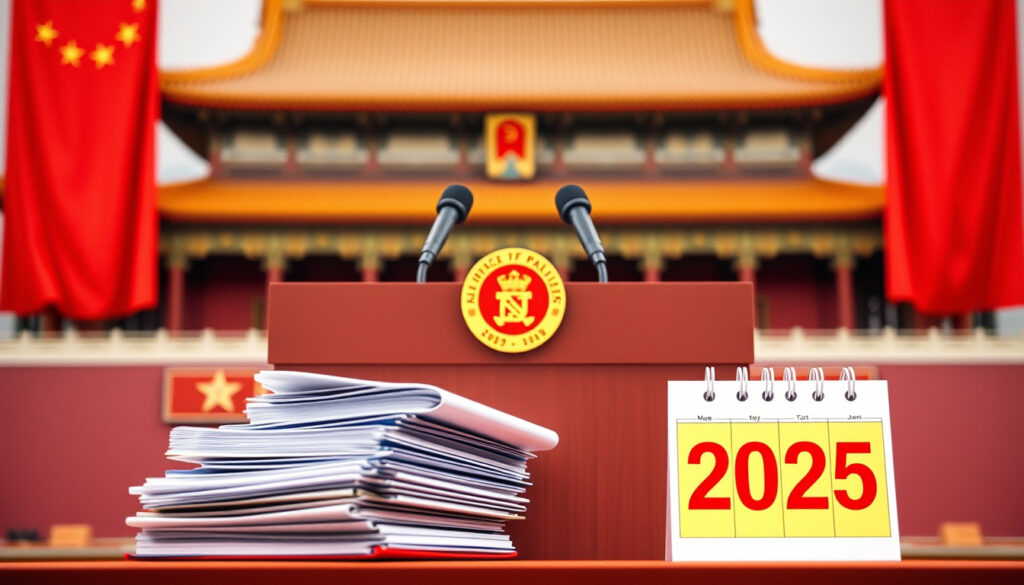
Xi Jinping’s Recent Speeches: What They Signal for 2025-2026
Few world leaders command attention quite like Xi Jinping, whose public addresses often set the tone for global economic and geopolitical shifts. Whether you’re tracking China’s next Five-Year Plan or trying to read between the lines on Taiwan policy, his recent speeches offer a dense signal. This article cuts through the noise, cross-referencing his latest publicly available statements to highlight the recurring themes that matter most for 2025 and beyond.
Latest major address: 2026 New Year message (2025-12-31) ·
Key policy window: 15th Five-Year Plan (2026-2030) ·
Core themes: Technology self-reliance, economic planning, Taiwan unification
Quick snapshot
- Xi Jinping delivered a 2026 New Year message on 2025-12-31 (SCIO, China’s state information office)
- He called for economic planning for 2026-2030 on 2025-05-01 (CPPCC, China’s top political advisory body)
- Whether the 2026 New Year address signals a harder Taiwan line or a restatement of existing policy (Modern Diplomacy analysis)
- Specific economic targets for the 15th Five-Year Plan have not been publicly detailed (Modern Diplomacy analysis)
- 2025-12-31: 2026 New Year message broadcast (China Daily, state-affiliated newspaper)
- 2025-09-01: SCO summit speech promoting Belt and Road (gov.cn, official government portal)
- Formal unveiling of the 15th Five-Year Plan (2026-2030) expected in 2026
- Further policy signals on technology self-reliance and military modernization
Six key policy areas, one pattern: Xi Jinping’s recent addresses consistently weave together economic planning, technological sovereignty, and a firm stance on territorial integrity. The table below maps the most significant statements from 2022 to 2026.
| Date | Event / Speech | Key policy signal | Source |
|---|---|---|---|
| 2025-12-31 | 2026 New Year message | Science, innovation, and technology as major highlights | MP-IDSA, Indian defense and security think tank |
| 2025-09-01 | SCO summit speech | High-quality Belt and Road cooperation; inclusive economic globalization | gov.cn, official government portal |
| 2025-05-01 | Economic planning call | Make sound plans for 2026-2030 (15th Five-Year Plan preparation) | CPPCC, China’s top political advisory body |
| 2023 (specific date not publicly specified) | Speech on military and technology | Accelerate self-reliance in science and technology; bolster strategic capabilities | PBS NewsHour, U.S. public broadcaster |
| 2022-10 (20th Party Congress) | Party Congress report | Resolutely safeguard state power, systems, and ideology; build security capacity | Politico, U.S. political news outlet |
| 2022 (specific date not publicly specified) | Speech on environment | Boost low-carbon industries; intensify pollution control | BBC News, U.K. public broadcaster |
Economic planning: The 15th Five-Year Plan window
On 2025-05-01, Xi Jinping called for making sound plans for China’s economic and social development in the 2026-2030 period, as reported by the CPPCC, China’s top political advisory body. This period corresponds to the preparation window for China’s 15th Five-Year Plan, a blueprint that will shape the world’s second-largest economy for half a decade.
The 2026 New Year message reinforced this focus, with science, innovation, and technology as major highlights, according to analysis from MP-IDSA, an Indian defense and security think tank. The pattern suggests that economic modernization, driven by technological breakthroughs, will be the central narrative of the upcoming plan.
Investors and supply-chain managers face a concrete choice: prepare for a China that prioritizes domestic tech champions over foreign partnerships, or risk being locked out of the world’s largest manufacturing ecosystem.
The catch: while the broad themes are clear, specific economic targets — GDP growth rates, investment quotas, or sectoral priorities — have not been publicly detailed. The 15th Five-Year Plan’s formal unveiling, expected in 2026, will be the moment of truth.
Technology self-reliance: A decade-long push
Xi Jinping’s call to accelerate self-reliance in science and technology, reported by PBS NewsHour, a U.S. public broadcaster, dates back to a 2023 speech. This is not a new theme — it has been a consistent thread since at least 2017, when the 19th Party Congress speech heralded greater assertiveness in Chinese foreign policy, as described by CSIS, a Washington-based think tank.
The 2026 New Year message elevated technology to a “major highlight,” signaling that the push for self-reliance is intensifying, not plateauing. This aligns with the broader strategic goal of reducing dependence on foreign semiconductor and advanced manufacturing supply chains.
For Western tech firms, the implication is stark: deeper engagement with China’s market may require accepting technology transfer terms that accelerate the very self-reliance Beijing seeks. The alternative is a shrinking addressable market.
Taiwan messaging: Restatement or escalation?
Xi Jinping’s 2026 New Year address on Taiwan has sparked debate among analysts. Brookings, a U.S. research institution, described the speech as a restatement of Beijing’s unification policy. However, a 2026-01-03 analysis from Modern Diplomacy, an online foreign policy magazine, argued that the address signaled a harder Taiwan line, framing it as “now or never.”
A 2025-12-31 YouTube-distributed segment from an unnamed channel also framed the message as projecting power while warning Taiwan, according to a YouTube video. The divergence in interpretation reflects the inherent ambiguity in Xi Jinping’s language — a deliberate feature that keeps both domestic audiences and international observers guessing.
What this means: for policymakers in Taipei, Washington, and Tokyo, the safe bet is to prepare for a more assertive posture, even if the current rhetoric remains within the bounds of established policy.
Military modernization and security
Xi Jinping’s 2023 speech, as reported by PBS NewsHour, included a call to bolster strategic capabilities in emergency response and other areas. This builds on the 2022 Party Congress report, where Politico, a U.S. political news outlet, reported that Xi Jinping said China would resolutely safeguard the security of state power, systems, and ideology, and emphasized building security capacity in key areas.
The military modernization thread is inseparable from the technology self-reliance push. Advanced semiconductors, AI, and quantum computing are dual-use technologies that serve both civilian economic growth and military capability. The 2026 New Year message’s emphasis on innovation likely encompasses defense applications.
External posture: Belt and Road and globalization
At the Shanghai Cooperation Organization summit on 2025-09-01, Xi Jinping promoted high-quality Belt and Road cooperation and urged a universally beneficial and inclusive economic globalization, as reported by gov.cn, China’s official government portal. This represents a softer, more cooperative face of Chinese foreign policy, contrasting with the harder line on Taiwan and technology competition.
The paradox: Xi Jinping simultaneously projects a vision of inclusive globalization while pursuing policies — technology self-reliance, military modernization, and territorial assertiveness — that are perceived by many Western nations as zero-sum. For countries along the Belt and Road, the choice is between deeper economic integration with China and alignment with U.S.-led security frameworks.
Environmental policy: A quieter thread
In a 2022 speech, Xi Jinping said China would boost low-carbon industries and promote low-carbon ways of life, and pledged to intensify pollution control, as reported by BBC News, a U.K. public broadcaster. While environmental themes have been less prominent in recent addresses, they remain part of the policy architecture, particularly as China positions itself as a leader in green technology manufacturing — solar panels, EVs, and batteries.
The implication: environmental policy under Xi Jinping is increasingly framed through the lens of industrial competitiveness rather than ecological stewardship. China’s green transition is real, but it serves the broader goal of technological and economic dominance.
Clarity section
Confirmed facts
- Xi Jinping delivered a 2026 New Year message on 2025-12-31 (SCIO)
- He called for economic planning for 2026-2030 on 2025-05-01 (CPPCC)
- Technology self-reliance was a major theme in the 2026 New Year message (MP-IDSA)
- He promoted Belt and Road cooperation at the 2025 SCO summit (gov.cn)
- He called for accelerating self-reliance in science and technology in a 2023 speech (PBS NewsHour)
- He pledged to boost low-carbon industries and intensify pollution control in a 2022 speech (BBC News)
- He emphasized safeguarding state power and ideology in the 2022 Party Congress report (Politico)
What’s unclear
- Whether the 2026 New Year address signals a harder Taiwan line or a restatement of existing policy (Modern Diplomacy)
- Specific economic targets for the 15th Five-Year Plan have not been publicly detailed
- The exact balance between military modernization and economic development priorities in the upcoming plan
Expert perspectives
“The 2026 New Year address emphasized science, innovation, and technology as major highlights.” For more on Xi Jinping’s recent speeches, see kernindex.de.
— MP-IDSA, Indian defense and security think tank
“Xi Jinping’s New Year speech on Taiwan was a restatement of Beijing’s unification policy.”
“Xi Jinping’s 19th Party Congress speech heralded greater assertiveness in Chinese foreign policy.”
“Xi Jinping said China would resolutely safeguard the security of state power, systems, and ideology.”
— Politico, U.S. political news outlet
The pattern across these expert voices is clear: Xi Jinping’s messaging is interpreted differently depending on the analyst’s vantage point. Think tanks focused on security see assertiveness; those focused on economics see continuity. The truth likely lies somewhere in between — a calibrated strategy that uses ambiguity as a tool.
Frequently asked questions
When did Xi Jinping deliver his most recent major public address?
Xi Jinping delivered his 2026 New Year message on 2025-12-31, broadcast through China Media Group and the internet (SCIO).
What is the 15th Five-Year Plan, and when will it be announced?
The 15th Five-Year Plan will cover 2026-2030. Xi Jinping called for making sound plans for this period on 2025-05-01 (CPPCC). The formal plan is expected to be unveiled in 2026.
What did Xi Jinping say about Taiwan in his 2026 New Year address?
Analysts disagree on the interpretation. Brookings described it as a restatement of unification policy, while Modern Diplomacy argued it signaled a harder line.
What are the main themes of Xi Jinping’s recent speeches?
The recurring themes include technology self-reliance, economic planning for the 15th Five-Year Plan, Taiwan unification, military modernization, and Belt and Road cooperation.
Has Xi Jinping addressed environmental policy recently?
In a 2022 speech, he pledged to boost low-carbon industries and intensify pollution control (BBC News). Environmental themes have been less prominent in 2025-2026 addresses.
What did Xi Jinping say at the 2025 Shanghai Cooperation Organization summit?
He promoted high-quality Belt and Road cooperation and urged a universally beneficial and inclusive economic globalization (gov.cn).
How has Xi Jinping’s stance on technology self-reliance evolved?
He called for accelerating self-reliance in science and technology in a 2023 speech (PBS NewsHour), and the 2026 New Year message elevated technology as a major highlight, indicating an intensifying focus.
What is the significance of the 2022 Party Congress report?
In the 2022 report, Xi Jinping emphasized safeguarding state power, systems, and ideology, and building security capacity in key areas (Politico). This set the tone for the current policy direction.
Related reading
- Roy Cohn: Life, Death, and Influence on Trump — A profile of a political strategist whose tactics have influenced modern leadership.
- Edward the Confessor: Childless King Who Changed England — A historical look at how a monarch’s decisions shaped a nation’s trajectory.
For investors, policymakers, and analysts tracking China’s trajectory, the signal from Xi Jinping’s recent addresses is consistent: technology self-reliance, economic planning, and territorial integrity form an interconnected strategy. The 15th Five-Year Plan will be the definitive test of whether these themes translate into concrete policy. For Western businesses operating in China, the choice is clear: adapt to a landscape where domestic champions are prioritized, or face a shrinking window of opportunity.
More related posts
 Josephine Tewson: Life, Death, and Friendship with Routledge
 Manuel Garcia-Rulfo: Biography, Height, Netflix Career
 Ant-Man 4 Cancelled? Box Office Flop & Franchise Future
 Maika Monroe: Movies, Relationships, and Quick Facts
 £480 Universal Credit Eligibility: How Much Would I Get
 Jean Fergusson: Biography, Husband, Cause of Death & Career
 Maxi Dress With Sleeves – Essential Wardrobe Versatile Piece
 Aldi Heated Clothes Airer: Price, Review & Running Costs
