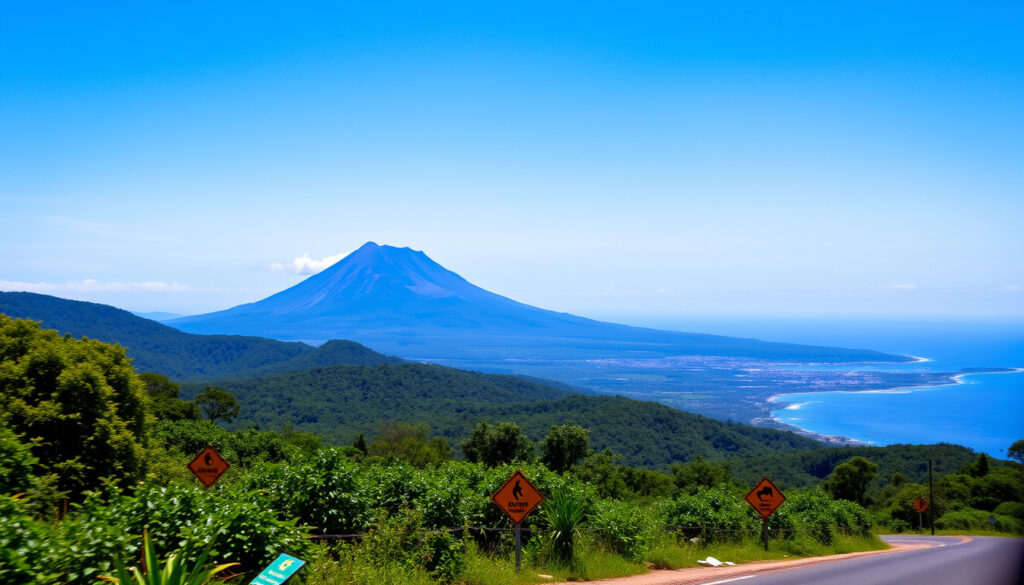
El Salvador Travel Guide 2025: Safety and Tips
El Salvador’s 2025 travel picture is more encouraging than the country’s older headlines suggest, but that does not mean you should show up without a plan. The current travel advice, entry details, and on-the-ground circuits are worth looking at together.
2025 trip planning in one line: Level 1 travel advisory · 2.4 homicide rate per 100,000 · US$12 tourist card · best weather roughly November to April
Safety Essentials
- Check travel advisories before booking — U.S. State Department.
- Use registered taxis or ride-hailing apps, per World Travel Guide.
- Avoid walking in cities after dark, per World Travel Guide.
- Keep valuables out of sight — World Travel Guide warns of pickpocketing at bus stations, airports, and tourist sites.
Travel Logistics
- No visa needed for most tourists — Lonely Planet confirms a US$12 tourist card suffices.
- Currency: USD and Bitcoin accepted — U.S. dollar is the primary currency, per Atlas Guide.
- Spanish is widely spoken; English less common — Lonely Planet.
- Rental cars recommended for rural exploration, per World Travel Guide.
Top Experiences
- Surfing at El Tunco beach — Atlas Guide calls it the center of El Salvador’s surf-travel scene.
- Hiking the Santa Ana volcano — a key destination cited by National Geographic.
- Exploring the Ruta de las Flores villages — a classic coffee-country route per Atlas Guide.
- Visiting Joya de Cerén archaeological site — featured in National Geographic.
Key Facts
- Capital: San Salvador — Atlas Guide.
- Population (2024 est.): 6.3 million — Atlas Guide.
- Homicide rate (2023): 2.4 per 100,000 — U.S. State Department.
- State of emergency: in effect since March 2022 — Atlas Guide.
| Topic | Snapshot |
|---|---|
| Capital | San Salvador |
| Official language | Spanish |
| Currency | U.S. dollar (USD) and Bitcoin (BTC) |
| Population | 6.3 million (2024 est.) |
| Area | 21,041 km2 |
| Government | Presidential republic |
| President | Nayib Bukele |
| GDP per capita | $5,400 (2023 est.) |
| Homicide rate | 2.4 per 100,000 people (2023) |
| State of emergency | In effect since March 2022 |
The data reveals a country that has transformed its safety profile faster than almost any other in the hemisphere — but the trade-offs are real.
Is it safe to go to El Salvador now?
The U.S. State Department currently lists El Salvador at Level 1: Exercise Normal Precautions as of April 8, 2025. That is the advisory level used for destinations where normal precautions apply rather than elevated caution. U.S. State Department official travel advisory.
The security trend is also very different from ten years ago. The 2023 homicide rate was 2.4 per 100,000 people, and Atlas Guide online destination guide says the homicide rate has fallen. At the same time, a state of emergency has been in place since March 2022, so visitors should still take the current rules seriously.
Current security situation
The state of emergency has reduced homicides but also restricts some civil liberties. Reuters reported on April 8, 2025 that the United States moved El Salvador from Level 2 to Level 1, attributing the change to reduced gang activity and violent crime. Reuters news agency.
Official travel advisories
The U.S. State Department notes gang activity has decreased over the last three years, contributing to reduced violent crime and murders. U.S. State Department official travel advisory.
Safety by region
World Travel Guide advises avoiding walking alone or on remote trails. It recommends using ATMs in shopping centres, hotels, or banks rather than at night or in poorly lit areas. World Travel Guide.
| Concern | What to check | 2025 picture | Reference |
|---|---|---|---|
| Safety | Official advisory | Level 1: Exercise Normal Precautions | U.S. State Department |
| Entry | Tourist visa | No visa required for short stays; passport and US$12 tourist card required | Lonely Planet |
| Timing | Best travel window | Roughly November through April | National Geographic |
The pattern: the official risk level has dropped, but the state of emergency remains a wildcard that travelers should factor into their plans.
Do you need a visa or tourist card to visit?
For short tourist stays, most U.S. visitors do not need a visa. What you do need is a valid passport and the entry tourist card, which costs US$12, according to Lonely Planet travel publisher.
- Passport: required for entry.
- Tourist card: costs US$12 and is part of the entry process.
- Visa: not required for many short tourist visits.
What language do they speak in El Salvador?
Spanish is the official language. Outside major hotels and tourist corridors, English is less commonly spoken, so a small amount of Spanish goes a long way. Lonely Planet travel publisher.
- Spanish: the official language of El Salvador.
- English: more common in hotels and tourist services, but not universal.
- Translation tools: download an offline Spanish phrase pack before you arrive.
What are the best places to visit in El Salvador?
If you are planning a first route, Atlas Guide online destination guide says the main tourist circuits are San Salvador’s hotel zone, the Surf Coast, the Ruta de las Flores, and Suchitoto.
- San Salvador hotel zone: the practical base for the capital.
- Surf Coast: the center of El Salvador’s surf-travel scene.
- Ruta de las Flores: the classic route through coffee-country villages.
- Suchitoto: a colonial town popular with weekend travellers.
- Joya de Cerén: the archaeological site featured in National Geographic travel media outlet.
When is the best time to visit El Salvador?
National Geographic travel media outlet says the driest and sunniest travel window is roughly November through April.
- November to April: the driest and sunniest window.
- May to October: wetter, greener, and less predictable.
What should you know before traveling?
Two practical safety rules repeat in the advice: do not drink tap water, and do not wear camouflage-style clothing.
- Tap water: not considered safe to drink, according to Lonely Planet travel publisher. Drink bottled or filtered water.
- Camouflage: avoid military-style or camouflage clothing. U.S. State Department guidance includes this in its security advice.
- State of emergency: the national state of emergency has been in effect since March 2022, so keep current with local rules. Atlas Guide notes checkpoints are common. Atlas Guide online destination guide.
What the advisories actually say
“Level 1: Exercise Normal Precautions”
“The driest and sunniest travel window is roughly November through April.”
“You will need your passport and a US$12 entry tourist card.”
“Main tourist circuits include San Salvador’s hotel zone, the Surf Coast, Ruta de las Flores, and Suchitoto.”
Bottom line: El Salvador’s 2025 travel story is not the one from the country’s dark headlines a decade ago. The practical takeaway for a first trip is straightforward: follow the official advice, keep your street smarts on, carry the US$12 tourist card, and build your route around the places the guidebooks actually point you to.
Related reading: **Mt Fuji: Last Eruption, Climbing Trails, Weather & Access (2025)** · **Mt Fuji: Last Eruption, Climbing Trails, Weather & Access (2025)**
travelandtourworld.com, snaphappytravel.com, travel.state.gov, nphusa.org, denvergazette.com, travelandleisure.com
Frequently asked questions
- Is El Salvador safe for tourists in 2025? Yes, with normal precautions. The U.S. State Department lists El Salvador at Level 1: Exercise Normal Precautions. The state of emergency has been in effect since March 2022, and travelers should continue to follow local guidance.
- Do U.S. citizens need a visa for El Salvador? No visa is required for short tourist stays, but you do need a valid passport and a US$12 tourist card.
- What language do they speak in El Salvador? Spanish is the official language. English is less common outside major hotels and tourist areas.
- Is English widely spoken in El Salvador? Not outside the tourism economy. Carrying a translation app or learning a few Spanish phrases helps.
- What is the best time to visit El Salvador? The driest and sunniest window is roughly November through April, according to National Geographic.
- What should I avoid in El Salvador? Avoid drinking tap water, and avoid camouflage-style or military-style clothing.
More related posts
 Alexander Graham Bell: Telephone Inventor & Controversy
 St Mirren F.C. – History, Trophies and Stadium Facts
 Jason Watkins: Daughter Maude, Tragedy and Advocacy
 Julian Casablancas: Sobriety, Nepo Band, Divorce & More
 Miranda Cosgrove: Age, Net Worth, Relationships (2025)
 Angela Rippon: Health, Age, Family, and Career Facts
 Mr Terrific Powers: DC’s Genius Hero Without Superpowers
 Brian McFadden: Relationships and Family Life
