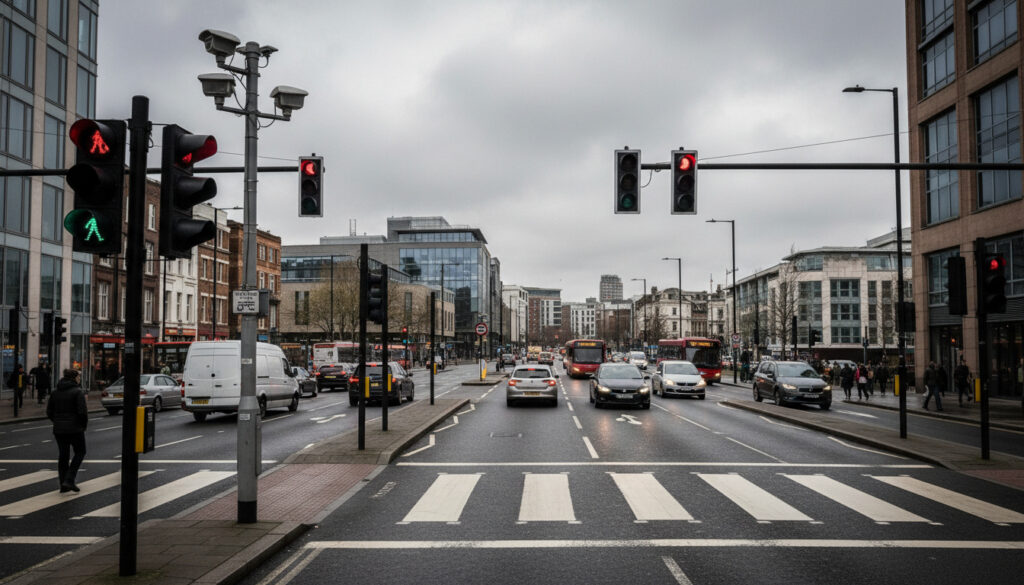
What Is a Puffin Crossing – UK Sensors, Rules and Differences
A puffin crossing represents the most technologically advanced signalised pedestrian crossing currently deployed on British roads. Unlike earlier designs that rely on fixed timing intervals, these installations use intelligent sensor systems to detect actual pedestrian movement, adjusting signal phases dynamically to balance safety with traffic efficiency.
The acronym PUFFIN stands for Pedestrian User-Friendly INtelligent crossing, a designation that reflects engineers’ focus on adapting traffic control to human behaviour rather than forcing pedestrians to conform to rigid machine cycles. First trialled in Kent during the mid-1980s, these crossings have now largely superseded the older pelican design across urban UK environments.
What Is a Puffin Crossing?
These crossings are commonly found near Ford Garage Near Me – Authorised UK Dealers and Services Guide locations in urban centres where high pedestrian volumes meet busy traffic corridors. The defining characteristic remains the integration of pedestrian detection technology directly into the signal control system.
- Uses sensors to detect waiting pedestrians, reducing unnecessary stops for traffic
- Static light displays only—no flashing amber or green phases
- Improves traffic flow by adapting to real pedestrian presence
- Crossing request cancels automatically if pedestrians walk away
- Extended crossing periods available for slower walkers
- Audible signals assist visually impaired users
| Fact | Details |
|---|---|
| Acronym Meaning | Pedestrian User-Friendly INtelligent |
| Introduced | Late 1980s trials, widespread 1990s |
| Primary Sensors | Infrared and microwave detection |
| Detection Range | Up to 20 metres |
| Light Cycle | Demand-actuated, no fixed timer |
| Standard Usage | Common in UK urban areas |
| Accessibility | Tactile paving, audible signals, ramps |
| Vehicle Signals | Red, red/amber, green, amber (steady) |
How Does a Puffin Crossing Work?
Sensor Technology
Two primary sensors monitor the crossing area, mounted on top of the traffic light infrastructure. The Pedestrian Crossing Detector (PCD) tracks pedestrians as they traverse the road, capable of extending the red light for slower-moving individuals. The Pedestrian Kerb Detector (PKD) observes the waiting area, cancelling the crossing request if the pedestrian departs before the signal changes. These systems typically employ infrared or microwave technology, sometimes supplemented by pressure-sensitive mats, feeding real-time data to the central controller. Technical specifications confirm these installations use computerised control systems rather than mechanical timers.
Signal Timing Logic
The pedestrian phase triggers only when three conditions align: the push button has been activated since the last crossing sequence, the maximum green timer for traffic has elapsed, and detectors confirm a pedestrian remains at the kerb. This demand-responsive approach eliminates fixed intervals that might keep traffic stationary while no pedestrians wait, or force pedestrians to wait unnecessarily during light traffic periods. Driving theory resources indicate this timing methodology differs significantly from older crossing designs.
Visual and Audible Signals
Unlike pelican installations, puffin crossings display static signals only. The pedestrian unit shows either a red or green man, never flashing. A beeping tone typically accompanies the green phase, though local authorities may restrict these during certain hours near residential areas to minimise noise disturbance.
The kerb detector cancels your request if you walk away after pressing the button, preventing unnecessary traffic delays. You must remain at the crossing until the signal changes.
Puffin vs. Pelican Crossing: Key Differences
Technology and Timing
Pelican crossings operate on predetermined time cycles, forcing pedestrians to complete their crossing within fixed intervals regardless of their walking speed. Puffin crossings utilise the PCD and PKD sensors to tailor the crossing duration to actual pedestrian movement, accommodating mobility-impaired users naturally without manual intervention. Comparative analysis suggests this makes puffin crossings less disruptive to traffic flow while providing better safety for slower pedestrians.
Traffic Light Sequences
Drivers encounter distinct signal behaviours at each crossing type. Pelican installations display a flashing amber phase, allowing drivers to proceed once pedestrians have cleared the crossing. Puffin crossings eliminate this flashing phase entirely, using the standard traffic light sequence of steady red, red-and-amber, green, and amber only. This standardisation reduces driver confusion and potential conflicts. Motoring organisations emphasise that at puffin crossings, amber signals remain steady rather than flashing.
Pelican crossings feature a flashing amber light for drivers; puffin crossings do not. At a puffin, treat the signals exactly as you would at a standard traffic light junction.
Rules, Safety, and Advantages of Puffin Crossings
Driver Responsibilities
Motorists must stop when the red light shows and remain stationary until the signal progresses to green. The amber phase warns of impending red. Unlike pelican crossings, there is no flashing amber period permitting early departure. Automotive publications advise drivers to proceed only when the green light displays.
Pedestrian Protocol
Cross only when the green man appears on the black and yellow box positioned above the demand button. The sensors will detect your presence and adjust timing accordingly. There is no flashing green man to indicate clearance time; the signal remains solid green until you finish crossing or the maximum time elapses.
Accessibility Features
Ramps and tactile paving assist wheelchair users and those with visual impairments. Countdown displays indicate remaining crossing time at some installations. The system automatically extends crossing durations for slower pedestrians detected by the PCD, benefiting elderly users and parents with prams without requiring additional button presses.
Sensor accuracy requires regular calibration. Weather contamination and urban grime can affect detection reliability, necessitating periodic servicing to prevent drift and ensure pedestrian safety.
When Were Puffin Crossings Introduced?
-
First operational trials begin in Ashford, Kent, testing sensor-based pedestrian detection against traditional fixed-time systems. -
National rollout commences following successful trial data demonstrating improved safety and traffic flow. -
Puffin technology becomes the standard specification for new UK pedestrian crossings, largely replacing pelican installations. -
Present
Continuous upgrades include LED lighting conversions and enhanced sensor algorithms for better detection accuracy.
What Facts Are Established About Puffin Crossings?
Established Information
- Acronym confirmed as Pedestrian User-Friendly INtelligent crossing
- Sensor technology uses infrared and microwave detection systems
- Trials began 1986 in Ashford, Kent
- No flashing amber phase for drivers
- Static red and green man symbols only
- Automatic cancellation if pedestrian leaves kerb
Information Not Available
- Specific Highway Code rule numbers for puffin vs other types
- Department for Transport installation statistics
- Detailed safety statistics compared to other crossing types
- Toucan crossing specifications and direct comparisons
Why Were Puffin Crossings Developed?
Traffic engineers designed the puffin concept to address fundamental limitations of fixed-time crossings. Traditional pelican installations often resulted in vehicles waiting at red lights while crossing pedestrians had already finished, or pedestrians beginning to cross during red indications due to impatience. By integrating pedestrian detection directly into the signal timing, puffin crossings create a responsive system that maintains traffic fluidity while ensuring vulnerable road users receive adequate protection.
The design philosophy prioritises pedestrian convenience without compromising road capacity. Sensors distinguish between fleeting presence and genuine crossing intent, ensuring the system serves those who need it while minimising disruption to urban traffic patterns. This evolutionary step reflects broader shifts in traffic management toward intelligent transportation systems that adapt to real-world conditions rather than rigid schedules.
Sources and Attribution
Technical specifications regarding sensor technology and signal timing derive from Wikipedia entries and motoring organisation publications. Operational guidance for drivers appears in resources from Theory Test and Auto Express. Comparative analysis with pelican crossings and historical development details reference material from Boost2Rank. Driver advice regarding road positioning and signal interpretation comes from RAC driving guides.
Summary
Puffin crossings represent an evolution in pedestrian traffic management, replacing fixed intervals with sensor-driven responsiveness. The technology benefits both road users and pedestrians by reducing unnecessary delays while extending crossing time for those who need it. Understanding the distinction between these installations and older pelican crossings—particularly the absence of flashing amber phases—ensures correct behaviour from both drivers and walkers. For those checking When Does the Premier League Start – 2024/25 Dates Fixtures Guide while navigating urban environments, similar attention to signal timing proves equally essential.
Frequently Asked Questions
What are the rules for drivers at a puffin crossing?
Drivers must stop at red lights and wait for the green signal before proceeding. Unlike pelican crossings, there is no flashing amber phase. Steady amber indicates an impending red light.
How long do puffin crossings stay green?
There is no fixed duration. The green phase extends automatically while sensors detect pedestrians crossing and cancels if the kerb sensor detects you have walked away.
Can you cycle across a puffin crossing?
Cyclists should dismount and walk their bicycles across puffin crossings. These installations are designed specifically for pedestrian detection and do not accommodate wheeled vehicles in their sensor programming.
Why do puffin crossings have no flashing green man?
The static display prevents the confusion associated with clearance periods. Sensors determine when pedestrians have finished crossing, making flashing signals unnecessary and eliminating the pressure to rush.
What happens if I press the button then walk away?
The Pedestrian Kerb Detector registers your absence and cancels the crossing request automatically. This prevents traffic delays caused by ghost crossings where no pedestrian remains.
More related posts
 Motsi Mabuse: Weight Loss, Children, Earnings, and Sister Oti
 TUI BLUE Sensatori Biomar: Reviews, Facilities & Booking
 Ella Langley Facts: Real Name, Age, Family & Career
 Michael Biehn Today: Career, Relationships, and Recent Updates
 Lamine Yamal: Biography, Injury, Net Worth, Family & FAQs
 Edward the Black Prince: Life, Love, War, Illness
 Jeans Petite UK: The 2025 Fit Guide for 5ft 2 Shoppers
 Robert Vaughn: His Life, Net Worth, and Hollywood Friendships
