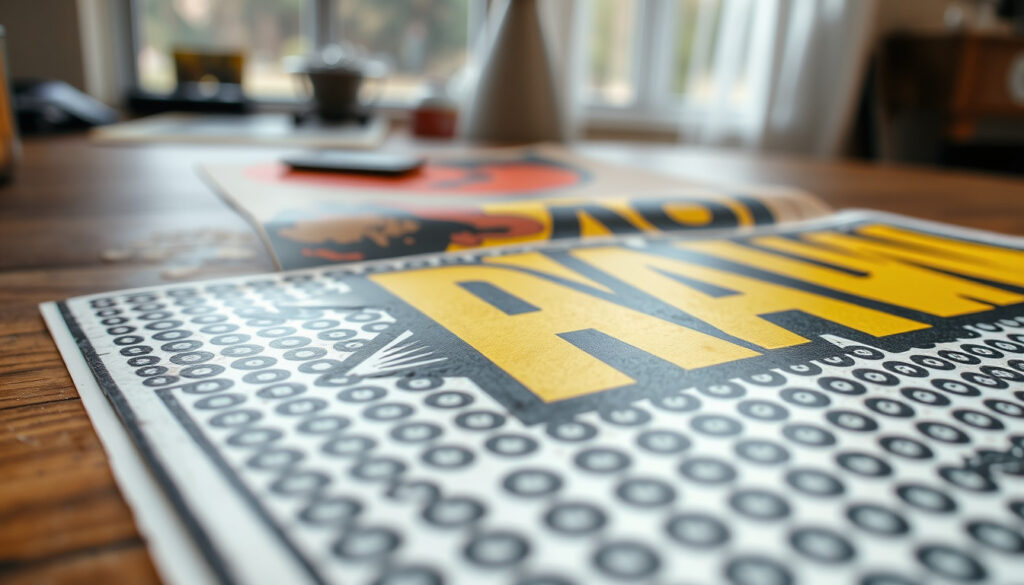
Roy Lichtenstein: Pop Art Pioneer, Ben-Day Dots & Biography
Anyone who has flipped through a comic book and then stood in front of a museum canvas has felt the strange pull of Roy Lichtenstein: the same bold dots, suddenly enlarged into a fine-art language. He took disposable imagery — comic strips, newspaper ads — and rebuilt it by hand at a scale that forced critics to argue about what art could be. His breakthrough paintings, Whaam! and Drowning Girl, both appeared in 1963, according to Sotheby’s (international auction house), and turned a commercial printing trick into Pop Art’s most recognizable signature. By the end, you’ll know exactly what you’re looking at — and why.
Born: October 27, 1923, New York City · Died: September 29, 1997, New York City · Movement: Pop Art · Most famous work: Whaam! (1963) · Children: Mitchell and David Lichtenstein
Quick snapshot
- Born in Manhattan, New York City, in 1923 (Sotheby’s, international auction house)
- Served in the US Army from 1943 to 1946 (Roy Lichtenstein Foundation, artist’s estate archive)
- Whaam! and Drowning Girl both date to 1963 (Sotheby’s, international auction house)
- Had two sons, Mitchell and David Lichtenstein (Roy Lichtenstein Foundation, artist’s estate archive)
- His exact net worth at death is not documented in public records (Tate, UK national collection)
- Who “first” started Pop Art is debated, because the movement emerged independently in Britain and the US (Tate, UK national collection)
- The degree of mutual influence between Lichtenstein and Andy Warhol remains an open art-historical question (Tate, UK national collection)
- The total number of works he created is not published as a single official figure (Tate, UK national collection)
- Rose to prominence in the 1960s as a progenitor of Pop Art (Sotheby’s, international auction house)
- Ben-Day dots began as a commercial printing technique for newspapers and magazines (Tate, UK national collection)
- His first fully achieved paintings drew on comic strips and advertisements (Roy Lichtenstein Foundation, artist’s estate archive)
- Major works are held in public collections, with Tate displays in London and Liverpool (Tate, UK national collection)
- The Roy Lichtenstein Foundation maintains his official biography and archival record (Roy Lichtenstein Foundation, artist’s estate archive)
- The Ben-Day dot remains the most widely recognized visual shorthand for Pop Art (Roy Lichtenstein Foundation, artist’s estate archive)
Seven quick facts, one pattern: nearly everything important in Lichtenstein’s biography circles back to New York and to the commercial print culture he turned into fine art.
| Fact | Detail |
|---|---|
| Full name | Roy Fox Lichtenstein |
| Born | October 27, 1923, New York City, US (Sotheby’s) |
| Died | September 29, 1997, New York City, US (Roy Lichtenstein Foundation) |
| Movement | Pop Art |
| Notable works | Whaam!, Drowning Girl, In the Car (Sotheby’s) |
| Children | Mitchell Lichtenstein, David Lichtenstein (Roy Lichtenstein Foundation) |
| Education | Ohio State University (BFA, MFA) (Sotheby’s) |
What is Roy Lichtenstein’s most famous piece of art?
Ask for one Lichtenstein and most people will name a comic-style battle scene. The archive points to a tight cluster of works from a single year: 1963.
What is Whaam!?
- Whaam! (1963) shows a fighter jet firing a missile, with the word “Whaam!” bursting across the panel in comic-book lettering (Sotheby’s, international auction house).
- Sotheby’s identifies it as one of Lichtenstein’s comic-strip-inspired signature paintings (Sotheby’s, international auction house).
The painting is Lichtenstein’s most reproduced image, and it contains every element of his mature style: a cropped dramatic scene, a flat printed texture, and a word that acts as both sound effect and composition.
What is Drowning Girl?
- Drowning Girl (1963) shows a woman’s head and hand above the waterline, with the thought bubble “I don’t care! I’d rather sink!” (Sotheby’s, international auction house).
- It belongs to the same 1963 cluster as Whaam!, which Sotheby’s groups under Lichtenstein’s comic-strip-inspired paintings (Sotheby’s, international auction house).
Where Whaam! delivers spectacle, Drowning Girl delivers quiet melodrama — a comic-book tearjerker enlarged into a meditation on resignation.
What is In the Car?
- In the Car (1963) is a large-scale scene of a woman in a car, drawn from Lichtenstein’s early Pop vocabulary (Roy Lichtenstein Foundation, artist’s estate archive).
- The Foundation describes his first fully achieved paintings as those built from comic-strip and advertising imagery (Roy Lichtenstein Foundation, artist’s estate archive).
The cropped windshield, the flat color fields, and the woman’s theatrical gaze make it a bridge between his comic works and his later explorations of advertising imagery.
The pattern: Lichtenstein’s fame rests on a handful of panels from a single year. Whaam!, Drowning Girl, and In the Car all share the same formula — a cropped dramatic scene, a printed dot texture, and an unapologetically flat palette.
What are 5 facts about Roy Lichtenstein?
- He was born October 27, 1923, in New York City (Sotheby’s, international auction house)
- He earned a BFA and an MFA at Ohio State University (Sotheby’s, international auction house)
- He became a leading figure of the Pop Art movement in the 1960s (Sotheby’s, international auction house)
- He had two sons, Mitchell and David Lichtenstein (Roy Lichtenstein Foundation, artist’s estate archive)
- He died September 29, 1997, from complications of pneumonia (Roy Lichtenstein Foundation, artist’s estate archive)
Did Roy Lichtenstein have kids?
- Lichtenstein had two sons: Mitchell Lichtenstein and David Lichtenstein (Roy Lichtenstein Foundation, artist’s estate archive).
The Roy Lichtenstein Foundation continues to document his work and archive today, which is why the family line remains a matter of public record rather than gossip.
Where was Roy Lichtenstein born?
- Roy Fox Lichtenstein was born in Manhattan, New York City, in 1923, and he died in the same city in 1997 (Sotheby’s, international auction house).
His birthplace matters because the city’s commercial print industry — newspapers, ads, comics — supplied the raw material for his later paintings.
What was Roy Lichtenstein’s cause of death?
- Lichtenstein died on September 29, 1997, in New York City (Sotheby’s, international auction house).
- The cause was complications from pneumonia (Roy Lichtenstein Foundation, artist’s estate archive).
He was 73. The illness arrived after a long career that had already secured his place in the history of American art.
What this means: Lichtenstein’s biography is a New York story — born, trained, and buried in the city whose mass graphics supplied his visual vocabulary.
What art techniques did Roy Lichtenstein use?
Lichtenstein’s approach was deceptively simple: imitate commercial printing so precisely that the painting becomes a question about originality.
What are Ben-Day dots?
- Ben-Day dots are a commercial printing technique that used patterns of small colored dots to color pictures in newspapers and magazines (Tate, UK national collection).
- Tate notes the technique is named after the printer Benjamin Day (Tate, UK national collection).
- The same dots can produce an optical effect similar to Pointillism (Tate, UK national collection).
Lichtenstein enlarged the dots far beyond anything a newspaper page could show, then painted them by hand — no printing press involved (Tate, UK national collection).
Lichtenstein’s paintings look machine-made, but every dot was applied by hand. That reversal — automated appearance, manual labor — is what makes the work a commentary on mass production rather than a copy of it.
Why did Roy Lichtenstein use comic book panels?
- His first fully achieved paintings were based on imagery from comic strips and advertisements (Roy Lichtenstein Foundation, artist’s estate archive).
- He rendered them in a style that mimicked the crude printing processes of newspaper reproduction (Roy Lichtenstein Foundation, artist’s estate archive).
- He surrounded the dots with black outlines, similar to the lines used to conceal imperfections in cheap newsprint (Tate, UK national collection).
- He restricted his palette to imitate the four colors of printers’ inks (Tate, UK national collection).
Lichtenstein was not copying comics casually; he was copying the look of mass reproduction itself. The subject matter changed — fighter jets, romance panels, washing machines — but the visual grammar stayed locked to print.
What materials did Roy Lichtenstein paint on?
- Lichtenstein painted on canvas using oil paint and Magna, an acrylic-based paint (Roy Lichtenstein Foundation, artist’s estate archive).
- The Ben-Day dot pattern was built up at large scale with careful hand-painting, preserving a mechanical look without any mechanical process (Tate, UK national collection).
The result was a surface that read as cold and industrial from a distance, but revealed itself as painstakingly handmade up close.
The trade-off: by removing the visible brushstroke, Lichtenstein made structure visible. Cropping, color, scale, and subject become the real content.
Did Roy Lichtenstein fight in WWII?
Before the dots and the fame, Lichtenstein spent three years in the US Army.
Where did Roy Lichtenstein serve during WWII?
- Lichtenstein served in the US Army from 1943 to 1946 (Roy Lichtenstein Foundation, artist’s estate archive).
- He was stationed in France, Belgium, and Germany (Roy Lichtenstein Foundation, artist’s estate archive).
- His duties included work as a file clerk and later as a typographer (Roy Lichtenstein Foundation, artist’s estate archive).
- He did not serve in direct combat (Roy Lichtenstein Foundation, artist’s estate archive).
The artist who recreated commercial print first studied it from the inside: typesetting, layout, and reproduction were part of his daily work during the war. That mechanical fluency shows up in his disciplined, perfectly spaced dots.
How did WWII influence Roy Lichtenstein’s later art?
- His wartime handling of printed material shaped his later interest in reproduction and mass imagery (Roy Lichtenstein Foundation, artist’s estate archive).
- After the war, he returned to Ohio State University and completed his MFA in 1949 (Roy Lichtenstein Foundation, artist’s estate archive).
The through-line is consistent: print culture. Lichtenstein moved from handling typed and printed documents to questioning how printed images carry meaning. The implication: his Pop Art was not a rejection of his wartime duties; it was an extension of them, shifting from producing printed material to interrogating it.
Who first started pop art?
Pop Art has a two-country origin story, and Lichtenstein is only half of it.
Is Roy Lichtenstein considered the founder of pop art?
- Pop Art emerged in Britain in the mid-1950s and in the United States in the late 1950s (Tate, UK national collection).
- British artists Richard Hamilton and Eduardo Paolozzi created some of the earliest pop works (Tate, UK national collection).
- Lichtenstein did not invent Pop Art, but his comic-strip paintings of 1961–1963 made him one of its most famous practitioners (Sotheby’s, international auction house).
The word “founder” overstates the case. Lichtenstein arrived late enough to inherit the label, but early enough to define its American visual identity.
How is Roy Lichtenstein connected to Andy Warhol?
- Lichtenstein and Warhol are both recognized as leading American Pop artists of the 1960s (Sotheby’s, international auction house).
- The precise degree of influence between them remains a live art-historical debate (Tate, UK national collection).
Warhol repeated celebrity photographs; Lichtenstein repeated comics. Both treated mass reproduction as the subject, not the tool.
The “who started it” argument is a dead end. Lichtenstein’s comic-strip paintings of 1961–1963 made him famous, but the movement’s roots run on both sides of the Atlantic — no single founder, no single date.
Why this matters: the “who started it” debate is less useful than the shared move — British and American artists turned mass culture into a subject, and Lichtenstein gave that subject its most imitated visual style.
Roy Lichtenstein timeline
Six markers capture the arc: a New York childhood, a wartime detour, and a three-year burst that changed American art.
- — Roy Fox Lichtenstein is born in New York City (Sotheby’s, international auction house)
- — Serves in the US Army in Europe (Roy Lichtenstein Foundation, artist’s estate archive)
- — Earns an MFA at Ohio State University (Roy Lichtenstein Foundation, artist’s estate archive)
- — Creates his first major Pop paintings using comic-book imagery (Roy Lichtenstein Foundation, artist’s estate archive)
- — Whaam! and Drowning Girl make him a Pop Art star (Sotheby’s, international auction house)
- — Dies in New York City at 73 (Sotheby’s, international auction house)
The entire public career runs through 1961–1963; the other decades built the foundation and the archive. That compression is why the 1963 works still feel like an explosion.
Read chronologically, the arc is short: wartime typography became postwar paintings, and the 1963 works remain the hinge.
What we know and what we don’t
A quick confidence check on the claims that float around Lichtenstein’s life and career.
Confirmed facts
- Birth and death dates in New York City (Sotheby’s)
- US Army service from 1943 to 1946 (Roy Lichtenstein Foundation)
- Whaam! and Drowning Girl, both dated 1963 (Sotheby’s)
- Hand-painted Ben-Day dots derived from commercial printing (Tate)
What’s unclear
- Exact net worth at death, which is not documented in public records
- Who “first” started Pop Art, given its independent British and American origins (Tate)
- The degree of mutual influence between Lichtenstein and Andy Warhol
- Whether his comic-strip borrowings read as homage or critique
On balance, the record is strongest on biography and weakest on money and influence.
Lichtenstein in his own words (and the archives’)
“I wanted to mimic cartoon style without paint texture, calligraphic line, modulation, and other expressionist qualities.”
— Roy Lichtenstein, quoted by the Roy Lichtenstein Foundation (artist’s estate archive)
“Lichtenstein’s work creates a paradox: machine-printed imagery that was carefully made by hand.”
— Tate (UK national collection)
“The dots became a trademark device identified with Lichtenstein and Pop Art.”
— The Roy Lichtenstein Foundation (artist’s estate archive)
Across those voices, one claim repeats: the hand-painted dot was Lichtenstein’s bridge from commercial print to fine art.
Why Lichtenstein still matters
Lichtenstein did not announce that comics were art; he painted them at a scale and temperature that made the question unavoidable. The hand-painted Ben-Day dot is the whole argument in miniature — a mechanical pattern made by human labor, enlarging a commercial shorthand into an object you cannot ignore. For anyone standing in front of Whaam!, the choice is clear: read the dots as a joke about mass culture, or read them as a serious inquiry into how images are made. Lichtenstein made both readings impossible to separate, and that ambiguity is why his work still pulls a crowd.
tate.org.uk, tate.org.uk, sothebys.com, tate.org.uk, dailyartmagazine.com, tate.org.uk, nationalgalleries.org, wikiart.org, artera.ae, jsma.uoregon.edu, ncl.ac.uk
Frequently asked questions
Where can I see Roy Lichtenstein’s art today?
Tate has presented his work in London and Liverpool, and his paintings appear in major public collections worldwide. The Roy Lichtenstein Foundation keeps the authoritative biography and archive (Tate, Roy Lichtenstein Foundation).
How many works did Roy Lichtenstein create?
No single public figure is commonly cited, but his output spans paintings, sculptures, prints, and public artworks. The Roy Lichtenstein Foundation’s catalog raisonné is the authoritative record (Roy Lichtenstein Foundation).
Was Roy Lichtenstein self-taught?
No. He studied at Ohio State University and earned both a BFA and an MFA before his Pop Art breakthrough (Sotheby’s).
How did Roy Lichtenstein choose his subjects?
He drew on comic strips, advertisements, and newspaper illustrations, cropping and enlarging them so they looked mass-produced while remaining entirely hand-painted (Roy Lichtenstein Foundation, Tate).
Did Roy Lichtenstein make sculptures?
Yes. Later in his career he translated his enlarged comic vocabulary into sculptures and public artworks, though his paintings remain the best-known legacy (Roy Lichtenstein Foundation).
What is Roy Lichtenstein’s legacy in modern art?
His Ben-Day dots became a trademark device identified with Lichtenstein and Pop Art, and his paintings are treated as classics of the movement (Roy Lichtenstein Foundation, Tate).
More related posts
 George Peppard: Cause of Death, Net Worth & A-Team Secrets
 Ben Platt: Biography, Marriage, Songs, Net Worth & More
 Rick Astley: Age, Net Worth, Wife, Daughter & Career Comeback
 Barbara Eden Today: Age 95, Larry Hagman, and Life Facts
 Jobe Bellingham: Age, Height, Brother, Stats, and Career Profile
 Daisy Cooper vs Daisy May Cooper: Key Differences
 Clive Russell: Actor Bio, Roles, and Personal Life
