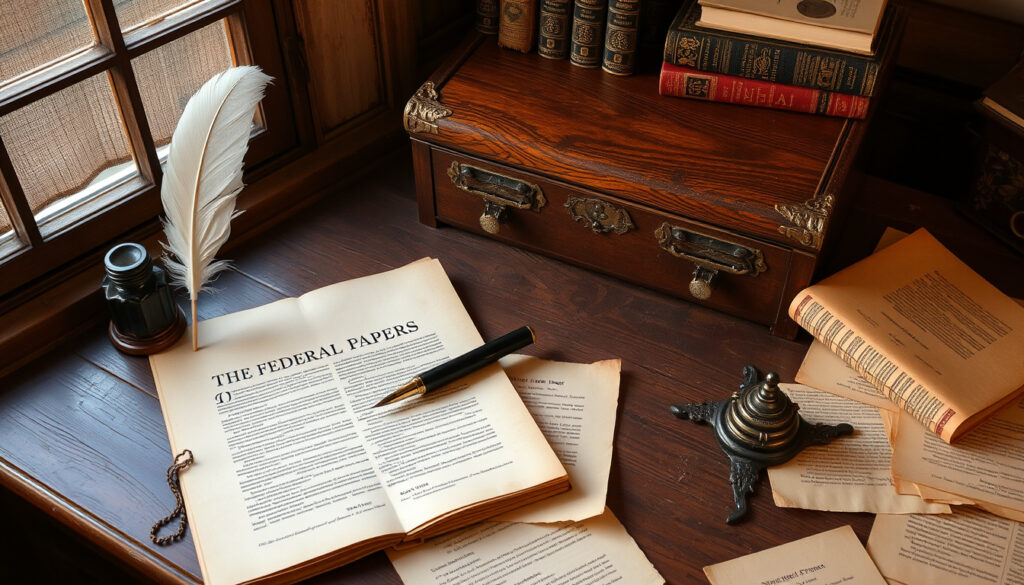
Alexander Hamilton: Real Story, Family, and Legacy
He is the face on the ten-dollar bill, but most people meet Alexander Hamilton on a Broadway stage before they ever meet him in a history book, while the real Hamilton was born in the Caribbean, built the young country’s financial system, and died on July 12, 1804, after a duel with Aaron Burr (Library of Congress, national library). What follows is the documented story behind the drama.
Birth date: January 11, 1755 or 1757 · Death date: July 12, 1804 · Role: Founding Father, first U.S. Treasury Secretary · Spouse: Elizabeth Schuyler Hamilton · Children: 8 · Killer: Aaron Burr (duel)
Quick snapshot
- Born in the West Indies on the island of Nevis (PBS American Experience, documentary series).
- First Treasury Secretary from 1789 to 1795 (U.S. Department of the Treasury, federal archive).
- Died one day after being shot by Aaron Burr in a duel (Library of Congress, national library).
- The exact year of Hamilton’s birth — 1755 or 1757 — remains a matter of dispute in major reference works (Britannica, reference work).
- Why Eliza did not attend Hamilton’s funeral is not settled by the surviving record (Library of Congress, national library).
- Whether Burr genuinely regretted the act is still debated (Library of Congress, classroom materials).
- Hamilton and Burr met at Weehawken, New Jersey, on July 11, 1804 (Library of Congress, national library).
- Hamilton died from the wound on July 12, 1804 (Library of Congress, classroom materials).
- Historians continue to separate the archival Hamilton from the dramatized version popularized by the musical (PBS American Experience, documentary series).
- The biggest open question is emotional, not factual: how much of the family’s private life will ever be known (National Archives, federal records agency).
Hamilton’s biography fits on one page, but the pattern is striking: he moved from Caribbean outsider to Cabinet architect to duel victim in under fifty years.
| Attribute | Detail |
|---|---|
| Full name | Alexander Hamilton |
| Born | January 11, 1755 or 1757, Charlestown, Nevis (PBS American Experience, documentary series) |
| Died | July 12, 1804, New York City (Library of Congress, national library) |
| Spouse | Elizabeth Schuyler, married 1780 (National Archives, federal records agency) |
| Children | 8 — Philip, Angelica, Alexander, James, John, William, Eliza, and Philip (National Archives, federal records agency) |
| Political party | Federalist |
| Offices held | U.S. Treasury Secretary, 1789–1795; Continental Army officer (U.S. Department of the Treasury, federal archive) |
What is the real story of Alexander Hamilton?
Early life and Caribbean origins
- Born in the West Indies on the island of Nevis (PBS American Experience, documentary series).
- The exact year — 1755 or 1757 — is disputed in major reference works (Britannica, reference work).
Hamilton’s origin story is unusual among the Founding Fathers. He was not born into a landed Virginia family or a Boston merchant household; he came from the Caribbean and rebuilt himself through ability and patronage. That immigrant path shaped how he thought about national power, public credit, and opportunity.
Role in the American Revolution
- Served as George Washington’s military aide (U.S. Department of the Treasury, federal archive).
- Was a New York delegate to the Constitutional Convention and a major author of the Federalist Papers (Britannica, reference work).
Washington trusted him enough to make him an aide early in the war, and that relationship gave Hamilton a front-row seat to the failures of the Articles of Confederation — the weaknesses he would later try to fix from the Treasury.
Architect of the financial system
- First Treasury Secretary from 1789 to 1795 (U.S. Department of the Treasury, federal archive).
- Consolidated Revolutionary War debts into a single national debt (National Archives, federal records agency).
Hamilton’s time at Treasury was not a quiet administrative job. He built a financial machinery for a country that had almost none, and he designed the department’s structure from a blank ledger.
Hamilton got the financial machine built, but centralizing national power created the enemies who later made his life dangerous.
Did Alexander Hamilton love his wife?
Hamilton’s marriage to Elizabeth Schuyler
- Hamilton married Elizabeth Schuyler in 1780; the couple had eight children (National Archives, federal records agency).
- Elizabeth came from a wealthy and politically powerful New York family (National Archives, federal records agency).
By the standards of the era, the marriage looked stable and unusually long. Hamilton died in 1804, and Eliza lived until 1854 — a full fifty years after his death. That longevity matters: she chose to keep his name, his papers, and his reputation.
The impact of the Reynolds affair
- The affair with Maria Reynolds is one of the most painful documented chapters in Hamilton’s biography; Hamilton publicly confessed it in a pamphlet rather than let it be used against him politically (Library of Congress, classroom materials).
The Reynolds affair strained the marriage but did not end it. Eliza stayed, and in the years after Hamilton’s death she worked to protect the legacy of the man who had publicly humiliated her.
Why didn’t Hamilton just marry Angelica?
Angelica Schuyler was already married to John Church when Hamilton entered the Schuyler circle. She and Hamilton shared a close intellectual friendship, but 18th-century social norms and Angelica’s existing marriage made a union impossible.
The implication: The Hamiltons were not a fairy-tale couple. Their marriage was a legal, social, and emotional partnership that survived a scandal — and the documentary record suggests genuine attachment under all the 18th-century formality.
What did Eliza do after Hamilton died?
Preserving Hamilton’s legacy
- Eliza organized Hamilton’s papers and worked to make sure his contributions would not be erased (National Archives, federal records agency).
That labor is one reason later reformers and historians could study the Treasury decade at all. Without Eliza, much of Hamilton’s personal and political writing would have been scattered or lost.
Charitable work
- She co-founded the New York Orphan Asylum Society, the first private orphanage in New York City (National Archives, federal records agency).
The orphanage was not a side project. It connected Eliza to the same kind of institutional building that Hamilton had done with the national finances, and it gave her a public identity beyond widowhood.
Eliza’s work with the orphanage gave her an independent legacy beyond her husband’s shadow.
Later life and death
- Eliza lived until 1854, long enough to see Hamilton’s reputation begin its long second life (National Archives, federal records agency).
Why this matters: Eliza used five decades of widowhood to become the gatekeeper of the Hamilton record. She was not a footnote to her husband’s story; she was its editor.
Why didn’t Eliza go to Hamilton’s funeral?
What the record does and doesn’t say
- The duel took place on July 11, 1804, and Hamilton died the next day (Library of Congress, national library).
- No surviving primary source gives a clear explanation for Eliza’s absence from the funeral (Library of Congress, classroom materials).
This is the question that sends people down research rabbit holes, and the honest answer is that there is no definitive record. Eliza was at the center of the tragedy; she had lost her husband to a violent code of honor. The archives do not preserve a clear explanation for her absence.
The pattern: The more painful a moment, the less the surviving record tends to say about it. That silence is not evidence of indifference — it is evidence of grief.
Was Burr regretful for killing Hamilton?
Burr’s own words
- Burr’s reported remark after the duel — “I did not intend to kill him” — suggests some regret, but he never publicly apologized (Library of Congress, national library).
The problem is that regret is hard to document. Burr had reason to protect himself: he faced murder charges in New York and New Jersey, though the cases were eventually dropped, and public opinion turned hard against him.
Long-term consequences
- The duel effectively ended Burr’s national political career (Library of Congress, classroom materials).
Burr lived for three more decades, but he never held high national office again. For Hamilton, the duel was fatal; for Burr, it was a form of political suicide.
The catch: Remorse is impossible to measure from the surviving record. What is measurable is that the duel ended Hamilton’s life and Burr’s public future.
How many babies did Alexander Hamilton have?
Names and family size
- Hamilton and Eliza had eight children: Philip, Angelica, Alexander, James, John, William, Eliza, and Philip (National Archives, federal records agency).
Counting the children is the easy part. The harder part is what the family endured: their oldest son, Philip, died in a duel in 1801, three years before Hamilton himself was killed in another duel.
What happened to the family
- Seven of the eight children survived to adulthood, but the death of Philip left a permanent shadow over the household (National Archives, federal records agency).
The pattern: The Hamiltons were a large family in an unforgiving era. Their personal history is not just a list of names; it is a record of repeated grief.
Timeline: Alexander Hamilton’s life
- 1755 or 1757: Born on the island of Nevis (PBS American Experience, documentary series).
- 1780: Married Elizabeth Schuyler (National Archives, federal records agency).
- 1789–1795: Served as the first U.S. Secretary of the Treasury (U.S. Department of the Treasury, federal archive).
- July 11, 1804: Dueled with Aaron Burr at Weehawken, New Jersey (Library of Congress, national library).
- July 12, 1804: Died from the wound (Library of Congress, national library).
- 1854: Eliza Hamilton died (National Archives, federal records agency).
What’s confirmed vs. what’s still uncertain
Confirmed facts
- Hamilton was born in the West Indies, not the mainland colonies (PBS American Experience, documentary series).
- He was the first Treasury Secretary (U.S. Department of the Treasury, federal archive).
- He died from a gunshot wound inflicted by Aaron Burr (Library of Congress, national library).
- He and Eliza had eight children (National Archives, federal records agency).
What’s unclear
- The exact year of Hamilton’s birth: 1755 or 1757 (Britannica, reference work).
- Whether Burr genuinely regretted the duel or merely regretted its consequences (Library of Congress, national library).
- Eliza’s exact reason for not attending the funeral (Library of Congress, classroom materials).
- How much of the Hamilton marriage can be judged from letters that were written to be read (National Archives, federal records agency).
Voices from the record
“It has been frequently remarked that it seems to have been reserved to the people of this country, by their conduct and example, to decide the important question, whether societies of men are really capable or not of establishing good government from reflection and choice…”
Alexander Hamilton, Federalist No. 1 (Britannica, reference work)
“I did not intend to kill him.”
Aaron Burr, reported remark after the duel (Library of Congress, national library)
Those two fragments capture the distance between Hamilton and Burr: Hamilton reasoning about institutions; Burr processing a moment that could not be reasoned away.
history.house.gov, archives.gov, loc.gov, archives.gov, archives.gov, nps.gov, csmonitor.com
Frequently asked questions
What caused Alexander Hamilton’s death?
Hamilton was shot by Aaron Burr in a duel at Weehawken, New Jersey, on July 11, 1804, and died the next day (Library of Congress, national library).
How did Hamilton shape the US economy?
As the first Treasury Secretary, Hamilton designed the department’s structure and consolidated Revolutionary War debts into a single national debt, creating a financial foundation for the federal government (U.S. Department of the Treasury, federal archive; National Archives, federal records agency).
What was Hamilton’s relationship with George Washington?
Hamilton served as Washington’s military aide during the Revolutionary War and later became a leading figure in Washington’s administration (U.S. Department of the Treasury, federal archive).
Did Alexander Hamilton remain married after the Reynolds affair?
Yes. He and Elizabeth Schuyler Hamilton stayed married until his death in 1804, and Elizabeth spent decades afterward preserving his legacy (National Archives, federal records agency).
Is there a documented reason for Eliza’s absence from Hamilton’s funeral?
No. The surviving record does not clearly explain why Eliza did not attend, and historians have offered explanations ranging from grief to physical collapse, but none is confirmed (Library of Congress, national library).
What were the names of Hamilton’s children?
The eight children were Philip, Angelica, Alexander, James, John, William, Eliza, and Philip (National Archives, federal records agency).
Related reading
- John Adams: Biography, Presidency, and Misunderstood Legacy — Hamilton’s fellow Founding Father and political rival.
- Edward the Black Prince: Life, Love, War, Illness — another historical figure whose reputation is built from archival fragments.
The real Hamilton is messier and more interesting than the musical’s version. He built the American financial system, he had a long and complicated marriage, and he died at 49 in a duel he could have walked away from. For readers trying to sort history from stagecraft, the choice is clear: trust the archives when they speak, and admit what they leave silent.
More related posts
 Krusty the Clown: Real Name, Catchphrase, and Jewish Roots
 Sky Free Contact Number 0800 Customer Services 0345 – UK Numbers and Guide
 Premium Bonds Prize Fund Rate Cut: What It Means for You (2026)
 Alisha Weir: Age, Movies, Wicked Rumours & Irish Roots
 10 Inches in CM: Exact Converter, Ruler Guide & Chart
 Sophie Hermann: Reality Star’s Life, Wealth & Name Change
 Jeans Marks Spencer: Styles for Older Women & Trends 2026
 Andie MacDowell: Nationality, Real Name, Faith, and Family
