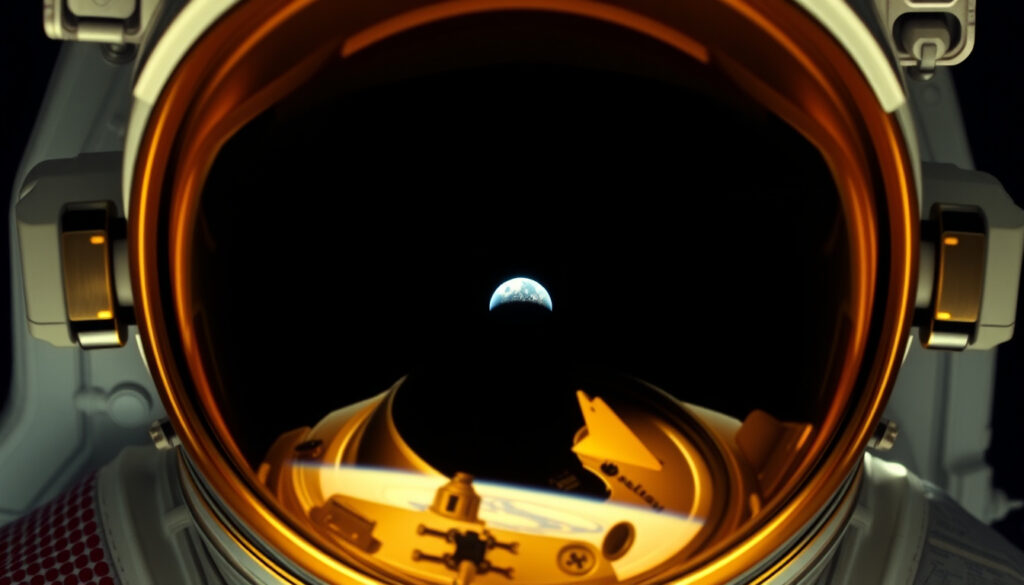
Yuri Gagarin: First Human in Space, Death, and Famous Quotes
Every launch since 1961 carries a quiet trace of Yuri Gagarin, even when Neil Armstrong’s name gets the louder cheer. Gagarin was the first human to leave Earth’s atmosphere, spending 108 minutes aboard Vostok 1 on 12 April 1961 before parachuting back to Soviet soil. This is the story of that single orbit, the fame that kept him grounded, and the disputed details that still hang over his death at 34.
First human in space: Yuri Gagarin ·
Launch date: 12 April 1961 ·
Mission: Vostok 1 ·
Duration: 108 minutes ·
Age at flight: 27 ·
Died: 27 March 1968
Quick snapshot
- Gagarin was the first human in space (Britannica Kids (educational encyclopedia))
- Vostok 1 completed one orbit of Earth (Wikipedia (community encyclopedia))
- The exact cause of the 1968 crash has never been settled (The Independent (UK news outlet))
- A verified transcript of Gagarin’s final words has never been published (The Independent (UK news outlet))
- Vostok 1 launched on 12 April 1961 at 9:07 am Moscow time (Britannica mission record (encyclopedia))
- Gagarin died on 27 March 1968 (BBC News (UK public broadcaster))
- Neil Armstrong walked on the Moon on 20 July 1969 (Phys.org (science news service))
- Apollo 11 carried a memorial satchel for Gagarin to the Moon, according to Wikipedia (community encyclopedia)
Yuri Gagarin at a glance
Most of what matters about Gagarin fits into eight rows: the dates, the single mission, and the way he died.
| Label | Detail |
|---|---|
| Full name | Yuri Alekseyevich Gagarin |
| Born | 9 March 1934, Klushino (near Gzhatsk), Soviet Union (Britannica biography (encyclopedia)) |
| Died | 27 March 1968, Kirzhach, Soviet Union (BBC News (UK public broadcaster)) |
| Age at death | 34 |
| Space mission | Vostok 1, 12 April 1961 (Britannica mission record (encyclopedia)) |
| Mission duration | About 108 minutes (BBC Future (science magazine)) |
| Orbits of Earth | 1 (Wikipedia (community encyclopedia)) |
| Maximum altitude | 301 km (187 miles) (Britannica mission record (encyclopedia)) |
The pattern is almost absurd in hindsight: everything that made Gagarin immortal happened in 108 minutes, on his first and only space mission.
Was Yuri Gagarin the first man to travel into space?
Yes — and the record is consistent across every major reference. Britannica Kids (educational encyclopedia) describes Gagarin’s flight as the first human spaceflight, placing a single orbit of Earth on 12 April 1961. Vostok 1 launched from Baikonur, in what is now Kazakhstan (Britannica Kids (educational encyclopedia)).
- Launch time: 9:07 am Moscow time (Britannica mission record (encyclopedia))
- Maximum altitude: 301 km (187 miles), above the recognized edge of space (Britannica mission record (encyclopedia))
- Gagarin landed at 10:55 am after the one-orbit flight (Britannica mission record (encyclopedia))
He did not land inside the capsule: Gagarin ejected and descended by parachute, a detail that surprises readers who assume a soft touchdown inside Vostok 1 (BBC Future (science magazine)).
Who was first, Neil Armstrong or Yuri Gagarin?
- Yuri Gagarin: first human in space, 12 April 1961 (Britannica Kids (educational encyclopedia))
- Neil Armstrong: first person to walk on the Moon, 20 July 1969 (Phys.org (science news service))
Armstrong’s footprint came eight years after Gagarin’s orbit — eight years in which the Soviet lead in space gave way to the American lunar program. Gagarin, for his part, never flew in space again.
How long did Yuri Gagarin spend in space?
- Total mission: about 108 minutes (BBC Future (science magazine))
- Orbits: one complete orbit of Earth, according to Wikipedia (community encyclopedia)
That 108 minutes is the entire basis of the Gagarin legend. No second flight, no long-duration record, no station command — one lap around the planet, at roughly 301 km up, and a parachute ride home.
Gagarin’s fame rests on the shortest possible completion of the hardest possible task: one orbit, first attempt, no return to space afterward.
The implication: the shortest possible flight produced the most durable possible legend — Gagarin did in 108 minutes what most careers could not do in a lifetime.
Why didn’t Yuri Gagarin go to space again?
Gagarin never flew a second space mission. The reason was not a lack of skill; it was his value as a symbol. Soviet officials kept him on the ground, where he could train others and carry the program’s flag abroad (Britannica biography (encyclopedia)).
- He remained active as a trainer and administrator after Vostok 1 (Britannica biography (encyclopedia))
- His international fame made him a high-value public representative for the Soviet space program (Britannica biography (encyclopedia))
- The cosmonaut selection process that produced Gagarin drew from military pilots; the 1960 intake that shaped the Vostok program is covered in the same biographical record (Britannica biography (encyclopedia))
In short, Gagarin swapped the launch seat for a desk and a parade route. The trade-off was brutal: the more famous he became, the less the Soviet leadership could afford to lose him. His only flying after 1961 was in jet aircraft — including the training flight that killed him.
What did Yuri Gagarin do after Vostok 1?
- Trained cosmonauts and worked in administrative roles inside the program (Britannica biography (encyclopedia))
- Toured internationally as the public face of the Soviet achievement in space (Britannica biography (encyclopedia))
He remained a serving officer and kept his pilot skills current in jets, but the door to orbit stayed closed.
What was Yuri Gagarin’s role in the Soviet space program?
- Trainer and administrator for the cosmonaut team (Britannica biography (encyclopedia))
- Public representative of the program at home and abroad (Britannica biography (encyclopedia))
In effect, Gagarin became the program’s living proof — a hero displayed, rather than a pilot deployed.
The first man in space became the last person the Kremlin wanted on a rocket: his propaganda value outweighed his pilot value.
Why this matters: the same caution kept him earthbound for seven more years — until a plane, not a rocket, ended the story.
Why did Yuri Gagarin’s plane crash?
Gagarin died on 27 March 1968 during a routine training flight in a two-seat MiG-15UTI near Kirzhach, northeast of Moscow (BBC News (UK public broadcaster)). Flight instructor Vladimir Seryogin died with him.
- Date: 27 March 1968 (BBC News (UK public broadcaster))
- Aircraft: MiG-15UTI, a two-seat trainer (BBC News (UK public broadcaster))
- Location: near Kirzhach, in the Vladimir region outside Moscow (Phys.org (science news service))
- Cause: never conclusively determined (The Independent (UK news outlet))
The precise cause of Gagarin’s death remained uncertain for decades.
The Independent (UK news outlet)
Several theories have been proposed, but none has been confirmed by the official record.
How old was Yuri Gagarin when he died?
- 34 — born 9 March 1934, killed 27 March 1968 (Britannica biography (encyclopedia))
He was younger than many first-time NASA astronaut candidates are today. The entire arc — flight, fame, death — took 34 years.
Any account claiming to know the single “real” cause of the crash is outrunning the evidence; the official file, as The Independent reported, never closed the question.
Gagarin belongs to a grim club of public figures whose deaths in crashes keep generating theories. One case with the same dynamic is the Patsy Cline plane crash.
The pattern: a hero’s death becomes a magnet for theories precisely because the state never closed the file.
Who was with Yuri Gagarin when he died?
Vladimir Seryogin, a flight instructor, was in the second seat of the MiG-15UTI. Both men died when the jet crashed near Kirzhach (BBC News (UK public broadcaster)).
Who was Vladimir Seryogin?
- Flight instructor on the fatal training flight (BBC News (UK public broadcaster))
- An experienced Soviet test pilot flying with the world’s most famous cosmonaut
Seryogin’s role was not ceremonial. He was there to supervise a routine sortie, which is why the loss of both pilots — two experienced aviators in one airplane — made the lack of answers harder to accept.
What was Gagarin doing when the plane went down?
- Conducting a routine training flight, according to Britannica biography (encyclopedia)
- Flying a two-seat jet aircraft with an instructor in the second seat (BBC News (UK public broadcaster))
The setup was standard. The outcome was not. Without survivors, investigators had only wreckage, radio logs, and theories.
The more routine the flight, the sharper the question: how does a simple training sortie kill the first man in space and his instructor?
The implication: the crash destroyed the two people who could have explained it, leaving only wreckage and theories.
What were Yuri Gagarin’s last words?
No verified transcript of Gagarin’s final transmission has been published. Reports from the crash investigation describe routine radio contact with ground control — nothing that reads like a famous farewell.
- No verified transcript exists in the public record (The Independent (UK news outlet))
- Any “last words” quote circulating online should be treated as unverified
Is there a reliable transcript of Gagarin’s final transmission?
- No — no confirmed recording or written transcript has been released (The Independent (UK news outlet))
- What investigators described was normal traffic between the aircraft and ground control, according to the crash record
For a crash this famous, the absence of a final transmission in the public record is itself telling: the official story was never fully opened.
A missing transcript leaves a vacuum, and vacuums in famous deaths fill with made-up quotes — Gagarin’s “last words” should be treated as fiction until a primary document appears.
The same refusal of the official record to explain everything drives interest in other fatal crashes, such as the Paul Walker death investigation.
Did Yuri Gagarin say I see no God up here?
The quote is a staple of space folklore: “I see no God up here.” The problem is that no confirmed primary source places that sentence in Gagarin’s mouth. It is widely attributed — and unverified.
- Attributed to Gagarin, with no confirmed recording or transcript
- His documented launch call, by contrast, is “Poyekhali!” (Britannica biography (encyclopedia))
What is Yuri Gagarin’s most famous quote?
- “Poyekhali!” — reported launch call during Vostok 1, translated as “Let’s go!” (Britannica biography (encyclopedia))
- “I see no God up here” — widely shared, but the sourcing collapses under scrutiny
There is an irony: the quote everyone remembers is the one with no paper trail, while the real mission produced a two-word “Let’s go!”
When a quote is too perfect for a Cold War narrative, check the sourcing; Gagarin’s most famous attributed line fails that test.
Why this matters: the “God” quote tells you more about the era that repeated it than about the man who may never have said it.
Yuri Gagarin vs. Neil Armstrong: two firsts, one space race
The two milestones are often lumped together as “space firsts,” but the missions were nothing alike: one proved a human could orbit and survive; the other proved a human could land on another world and return.
| Milestone | Yuri Gagarin | Neil Armstrong |
|---|---|---|
| Achievement | First human in space (Britannica Kids (educational encyclopedia)) | First person to walk on the Moon (Phys.org (science news service)) |
| Date | 12 April 1961 (Britannica mission record (encyclopedia)) | 20 July 1969 (Phys.org (science news service)) |
| Mission | Vostok 1 (Britannica mission record (encyclopedia)) | Apollo 11 — Wikipedia notes it carried a memorial satchel for Gagarin and Komarov to the Moon (Wikipedia (community encyclopedia)) |
| Flight profile | One orbit of Earth (Wikipedia (community encyclopedia)) | Lunar landing and surface walk (Phys.org (science news service)) |
The comparison cuts in Gagarin’s favor on timing — he got there first — and in Armstrong’s on distance. Gagarin’s mark even traveled with Apollo 11 in the form of that memorial satchel left on the Moon.
Timeline: from Vostok 1 to the Moon
The dates that anchor Gagarin’s story fit on one hand.
- — Vostok 1 completes one orbit; Gagarin becomes the first human in space (Britannica Kids (educational encyclopedia))
- — Gagarin and Vladimir Seryogin die in the MiG-15UTI crash near Kirzhach (BBC News (UK public broadcaster))
- — Neil Armstrong becomes the first person to walk on the Moon (Phys.org (science news service))
The pattern: Gagarin’s flight and his death bracket the moment when the Soviet early lead in space gave way to Apollo’s lunar finish.
Confirmed facts and open questions
The verified record on Gagarin is short, solid, and easy to separate from the legend that grew around it.
Confirmed facts
- Gagarin was the first human in space (Britannica Kids (educational encyclopedia))
- Vostok 1 orbited Earth once on 12 April 1961 (Britannica mission record (encyclopedia))
- Gagarin died on 27 March 1968 (BBC News (UK public broadcaster))
- Vladimir Seryogin died in the same crash (BBC News (UK public broadcaster))
What’s unclear
- The exact cause of the MiG-15UTI crash (The Independent (UK news outlet))
- The exact last words Gagarin said before death — no verified transcript exists (The Independent (UK news outlet))
- Whether Gagarin ever said “I see no God up here” — no primary source has been documented
- Which of the proposed crash theories, if any, is correct
- Why the official account has never been fully reopened
- Gagarin’s age at death (34) is derived from his birth and death dates, which are confirmed, but is not a primary fact
The balance of the record is clear: we know exactly what Gagarin accomplished, we do not fully know how he died, and the quotes attached to his name need a skeptical eye.
Two quotes, one with a paper trail
Poyekhali!
Yuri Gagarin, reported launch call during Vostok 1, 12 April 1961
The phrase “I see no God up here” is widely attributed to Yuri Gagarin, but no confirmed primary source exists for that statement. It remains a Cold War‑era attribution that crumbles under basic fact‑checking.
Why Gagarin still matters
Gagarin’s 108 minutes in orbit did more than mark a Soviet victory: they proved a human being could leave the planet and return. His death at 34, with the cause still unresolved, turned the first cosmonaut into a permanent open question. For educators, journalists, and anyone telling his story next, the choice is clear: anchor the flight in the documented record and mark the disputed quotes as legend, or let the myth keep rewriting the first man in space.
Related reading
- Patsy Cline Plane Crash: Cause, Passengers, and Aftermath
- Paul Walker Death: Crash Details, Cause, Lawsuit & Facts
These related articles highlight similar patterns of unresolved public fascination with the deaths of iconic figures in crashes.
kids.britannica.com, britannica.com, britannica.com, scribd.com
Frequently asked questions
Where was Yuri Gagarin born?
In Klushino, a village near Gzhatsk in the Soviet Union — the town is now named Gagarin, Russia (Britannica biography (encyclopedia)).
How many times did Yuri Gagarin orbit Earth?
Once. Vostok 1 completed a single orbit on 12 April 1961, according to Wikipedia (community encyclopedia).
Did Yuri Gagarin walk on the Moon?
No. He flew one orbit of Earth in April 1961; the first Moon walk came on 20 July 1969, more than a year after his death (Phys.org (science news service)).
How long did Yuri Gagarin spend in space?
About 108 minutes across one orbit of Earth (BBC Future (science magazine)).
Was Yuri Gagarin the first person in space?
Yes — his Vostok 1 mission on 12 April 1961 is recognized as the first human spaceflight (Britannica Kids (educational encyclopedia)).
The FAQs above address the most common questions about Gagarin’s life and death, separating verified facts from legend.
More related posts
 Megan Stalter: Age, Emmys Jeans, and Hacks Role
 UFC Fighter Rankings: Top 10 Greatest of All Time & Richest
 Pandora Charms Ireland: Exclusive Designs & Where to Buy
 Max Beesley: Actor, Musician, and How He Found Fame
 Sabre Gladiator: Real Name, Nationality, Partner & History Explained
 Geraint Thomas 2025: Current Role, Net Worth & Family
 Paul Smith Comedy: Tour, Wife, Net Worth & ADHD
 Jeffrey Archer Books in Order: Complete Guide to Series & Novels
