Paul Walker Death: Crash Details, Cause, Lawsuit & Facts
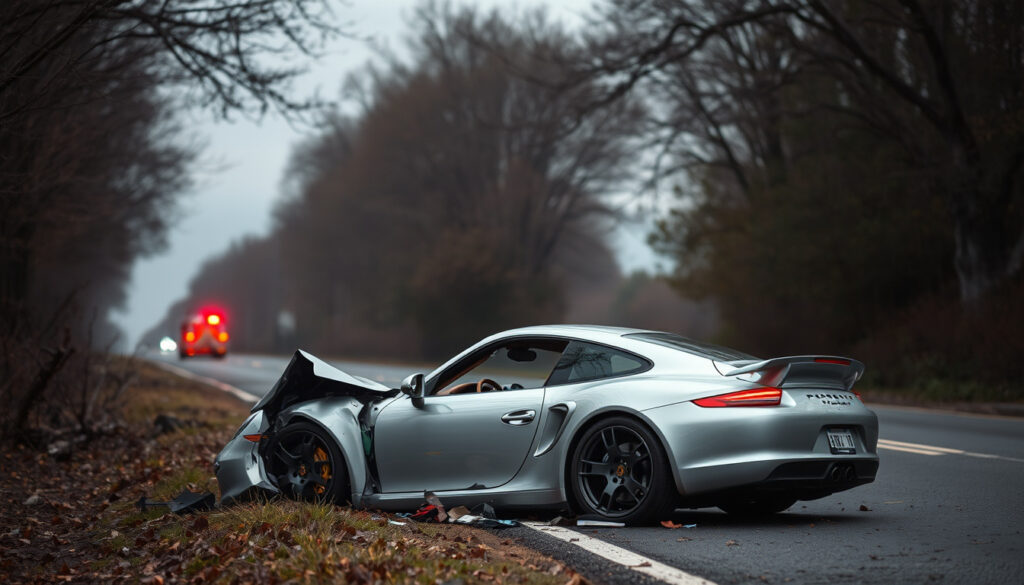
Some deaths turn into stories long before the facts are settled, but Paul Walker’s is a case where the official record is stranger than any rumor: a fast car, a missed judgment, and a fire that made rescue impossible. On November 30, 2013, the 40-year-old actor died in a single-vehicle crash in Santa Clarita, California, while riding as a passenger in a Porsche Carrera GT driven by his friend Roger Rodas. What follows separates the verified investigation findings from the allegations that kept the case in court for years.
Age at death: 40 · Date of crash: November 30, 2013 · Speed at impact: Over 100 mph (coroner estimate) · Vehicle: 2005 Porsche Carrera GT · Driver: Roger Rodas · Passenger: Paul Walker
Quick snapshot
- Roger Rodas was driving the 2005 Porsche Carrera GT (Los Angeles Times).
- Walker and Rodas both died in the crash.
- Both deaths were ruled accidental (LAist/KPCC).
- The car caught fire after impact.
- The exact second-by-second sequence before impact — including whether Rodas braked — remains outside the public record.
- Whether a mechanical failure contributed to the loss of control remains unresolved.
- Whether the seat belt remained properly positioned during the crash is not publicly confirmed.
- — Charity event for Reach Out Worldwide
- — They leave in the Carrera GT
- — Crash on Hercules Street
- — Emergency responders arrive
- Official case closed: deaths ruled accidental.
- Porsche settled the wrongful-death suit in 2017.
- No public ruling on the seat-belt design.
Nine facts frame the record, and one pattern holds: the public remembers Walker for the franchise, but the trail of the story line is about the car.
Key facts
| Attribute | Detail | Source |
|---|---|---|
| Age at death | 40 years | Wikipedia |
| Vehicle | 2005 Porsche Carrera GT | CBS News |
| Date of crash | November 30, 2013 | Los Angeles Times |
| Location | Hercules Street, Valencia, Santa Clarita, California | Wikipedia |
| Driver | Roger Rodas | Los Angeles Times |
| Passenger | Paul Walker | Los Angeles Times |
| Speed estimate | Over 100 mph | LAist/KPCC |
| Official ruling | Accidental deaths | LAist/KPCC |
| Lawsuit | Settled in 2017 | CBS News |
What is the reason Paul Walker died?
The Los Angeles County Coroner’s Office ruled both deaths accidental, as noted by LAist/KPCC.
The cause of death is not a mystery. The fire after impact is what turned a fatal crash into a public trauma.
How fast was Paul driving when he died?
Walker was not driving. Rodas was behind the wheel. The Los Angeles County Coroner’s Office reported the car was going over 100 mph when the crash occurred, according to LAist/KPCC.
Every estimate exceeds the legal limit, but the range — 80 mph to over 100 mph — is wide enough to feed years of second-guessing.
Who was driving the Porsche Carrera GT?
Roger Rodas, Walker’s friend and financial advisor, was driving the 2005 Porsche Carrera GT, according to Los Angeles Times.
Walker’s name led every headline, but the official record consistently placed Rodas in the driver’s seat.
What caused the crash and fire?
The crash involved a car traveling at more than double the posted speed, followed by a fire that began immediately after impact, according to Los Angeles Times.
The investigation focused on what caused the loss of control, per CBS News summary of the judge’s decision.
What did the family allege against Porsche?
The family’s complaint said Walker remained alive for about 80 seconds before the fire began, according to Los Angeles Times.
The lawsuit alleged that a defective seat-belt design trapped Walker after impact, but the public record does not confirm whether the belt remained properly positioned through the crash.
The seat-belt claim and the consciousness claim are legal assertions, not forensic findings.
The settlement closed the case without a public ruling on the seat-belt design, so the most painful allegation never received a final verdict.
What happened on November 30, 2013?
- — Walker and Rodas attend a charity event for Reach Out Worldwide (Los Angeles Times).
- — They leave in Rodas’s Porsche Carrera GT (Los Angeles Times).
- — Crash occurs on Hercules Street in Santa Clarita.
- — Emergency responders arrive.
What the official record shows vs. what remains disputed
One way to read the record is to sort it into two columns: what investigators could prove, and what the lawyers only alleged.
What investigators confirmed
- Paul Walker died in a single-vehicle crash in Santa Clarita on November 30, 2013 (Los Angeles Times).
- The car was a 2005 Porsche Carrera GT driven by Roger Rodas (Los Angeles Times).
- The car was going over 100 mph when it crashed (LAist/KPCC).
- Both deaths were ruled accidental (LAist/KPCC).
What remains unresolved
- The exact second-by-second sequence before impact — including whether Rodas braked — remains outside the public record (CBS News).
- Whether Walker was alive for 80 seconds before the fire began is an allegation, not a proven finding.
- The public record does not confirm whether the seat belt remained properly positioned through the crash.
The distinction matters because the legal system settled the case, but the public record still contains claims that were never tested in front of a jury.
latimes.com, abcnews.go.com, abcnews.com, the-express.com, autopsyfiles.org, latimes.com, theguardian.com, nbcsandiego.com
Frequently asked questions
How did Roger Rodas crash the car?
Rodas lost control on a slight curve, and the car swerved into a tree and a lamp post before catching fire.
What were Paul Walker’s last words?
There is no confirmed public record of Walker’s final words.
How fast was the Porsche Carrera GT going?
The coroner’s office reported the car was going over 100 mph at the time of the crash.
Where exactly did the crash happen?
The crash happened on Hercules Street in Valencia, a neighborhood of Santa Clarita, California (Wikipedia).
Were both Roger Rodas and Paul Walker killed in the crash?
Yes. Both Rodas and Walker died in the single-vehicle crash.
Did Porsche settle the lawsuit?
Yes. In 2017, Porsche and Walker’s family reached a settlement.
Paul Walker’s death was ruled accidental, but that word never settled the argument about whether a car like the Carrera GT should fail so violently. For Porsche, the 2017 settlement ended the legal exposure, but the public record still contains two competing narratives: one of driver error at speeds far above the limit, another of a car whose safety systems were not ready.
For automakers, the lesson is clear: a verdict of not at fault does not extinguish an emotional claim, and a fire in a high-performance vehicle will always be judged more harshly than a crash that stays silent.
The lawsuit alleged that a defective seat-belt design trapped Walker after impact, but the public record does not confirm whether the belt remained properly positioned through the crash.
More related posts
 Clive Russell: Actor Bio, Roles, and Personal Life
 Justine Lupe: Biography, Career, Husband, Kids & More
 Motsi Mabuse: Weight Loss, Children, Earnings, and Sister Oti
 Shania Twain: Health, Divorce, Husband, Family Facts
 Rangers vs St. Mirren – Preview Prediction Lineups H2H
 Ford Garage Near Me – Authorised UK Dealers and Services Guide
 British Gas Business Login: Official Guide & Access
