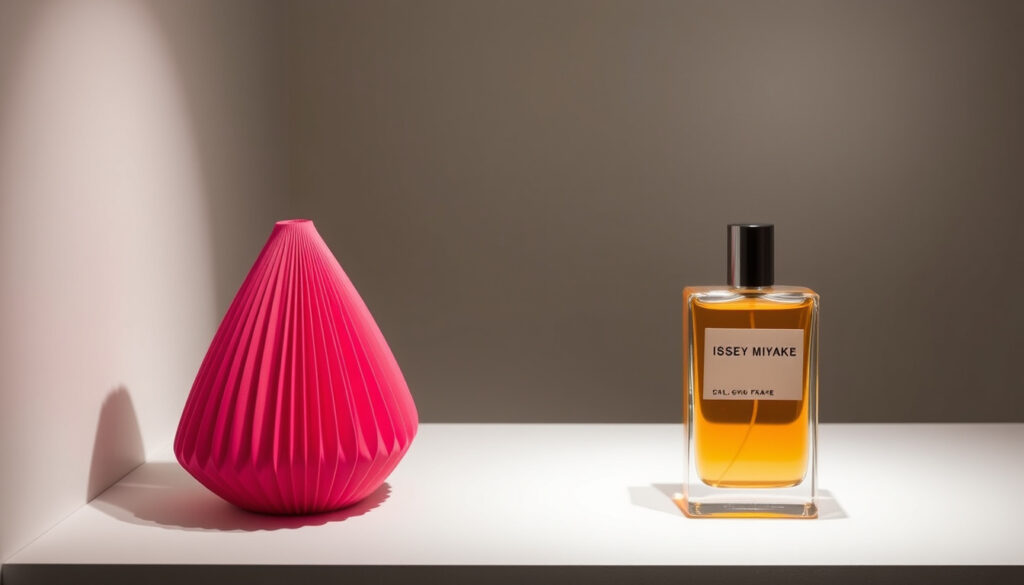
Issey Miyake: Brand, Biography, Fragrances & Legacy
The name Issey Miyake generates a specific kind of echo — you hear it from a fashion editor in Tokyo, from someone wearing a Pleats Please dress on a city bus, and from the person who just discovered L’Eau d’Issey at a department store counter. That reach, spanning from museum exhibitions to everyday fragrance counters, didn’t happen by accident — it was built on a designer who treated fabric as something to engineer, not just drape, and what follows is a look at the man, the brand, and why both still matter years after his passing.
Born: 1938, Hiroshima, Japan ·
Died: 2022, Tokyo, Japan ·
Nationality: Japanese ·
Known For: Pleats Please, L’Eau d’Issey ·
Fashion Debut: 1970, Paris ·
Major Award: Japan Art Academy Prize (2005)
Quick snapshot
- Born 22 April 1938 in Hiroshima, Japan (Encyclopaedia Britannica)
- Died 5 August 2022 in Tokyo (Encyclopaedia Britannica)
- Founded Issey Miyake Inc. in 1970; first collection in 1971 (ISSEY MIYAKE corporate history)
- Pleats Please line launched in 1993 (Encyclopaedia Britannica)
- Specific details of his early life in Hiroshima after the atomic bomb are not widely documented
- Exact sales figures for fragrances are not publicly disclosed
- Full extent of his involvement in later collections after 2010 is partially unclear
- Exact retail footprint after 2016 is not updated in public records
- 1938: Born in Hiroshima (Encyclopaedia Britannica)
- 1970: Debuts first collection in Paris (ISSEY MIYAKE corporate history)
- 1992: Launches L’Eau d’Issey fragrance (Encyclopaedia Britannica)
- 2022: Dies at age 84 (Encyclopaedia Britannica)
- Miyake Issey Foundation continues design education and archival work (Issey Miyake official site)
- Brand sub-lines like Pleats Please and IM MEN remain in active production (The Guardian)
- Museum retrospectives expected to sustain cultural relevance (Issey Miyake official site)
Eight key facts paint the portrait of the designer and the brand he built.
| Attribute | Detail |
|---|---|
| Full Name | Issey Miyake (Miyake Issey) |
| Date of Birth | 22 April 1938 |
| Place of Birth | Hiroshima, Japan |
| Date of Death | 5 August 2022 |
| Education | Tama Art University, Tokyo; Chambre Syndicale de la Haute Couture, Paris |
| Notable Achievements | Praemium Imperiale (2005); Japan Art Academy Prize (2005) |
| Founding Year | 1970 (Issey Miyake Inc.) |
| Signature Product | Pleats Please clothing; L’Eau d’Issey fragrance |
Is Issey Miyake a high-end brand?
Yes — but the label “high-end” fits differently than it does for European luxury houses. Issey Miyake operates in the premium segment, with pricing that places it alongside Comme des Garçons and Yohji Yamamoto, yet its identity is rooted less in heritage logos and more in material innovation. A typical Pleats Please dress retails between $300 and $600, while the more directional pieces from the main line and sub-brands can exceed $1,500 (Encyclopaedia Britannica). The brand’s official positioning emphasizes “research and experimentation” over traditional couture status (Issey Miyake official site).
Brand positioning and pricing
- The brand does not use the term “couture” in its own materials — it speaks of “design archives” and “education” (Miyake Issey Foundation)
- Pricing is premium but accessible compared to traditional haute couture houses
- The ready-to-wear lines and fragrances sit in the luxury-mass (masstige) crossover zone
Comparison with other luxury Japanese designers
- Competes directly with Comme des Garçons (Rei Kawakubo) and Yohji Yamamoto on design-forward positioning
- Unlike those peers, Miyake’s brand has a stronger mass-market fragrance arm that broadens access
- Store count of 133 locations in Japan and 91 internationally (as of 2016) indicates a substantial retail footprint (The Guardian)
Issey Miyake’s market segment
The brand sits in what analysts sometimes call “accessible luxury” — high enough in price and design ambition to feel aspirational, but broad enough in product range (eight lines from clothing to watches) to reach multiple buyer tiers (The Guardian).
For a buyer seeking status, Issey Miyake delivers intellectual cachet rather than visible logos. That works well in design-conscious markets but can feel invisible to buyers who measure luxury by emblem recognition.
The implication: Issey Miyake is high-end by price and design rigor, but its brand identity leans more toward “design institution” than “luxury house” in the classic European sense. That distinction matters for buyers deciding whether the investment aligns with their personal signal.
What is Issey Miyake most famous for?
Three innovations anchor the brand’s global reputation: a permanent pleating technique, a radical approach to zero-waste garment construction, and a fragrance that defined a decade.
Pleats Please line
Launched in 1993 after several years of development, Pleats Please transformed how garments move. The garments are cut and sewn first, then pleated between layers of paper in a heat press — the pleats are permanent and washable (Encyclopaedia Britannica). This approach eliminated the need for ironing and allowed the clothing to be folded flat and bounce back to shape.
- The line became the brand’s most commercially visible fashion product
- It embodies the brand’s philosophy of making clothes that work for the wearer’s body, not the other way around
Technology-driven clothing
Miyake’s A-POC (A Piece of Cloth) concept, developed with Dai Fujiwara in 1999, used computer-programmed knitting machines to produce entire garments from a single tube of fabric with no cutting waste (The Guardian). This was a pre-2000 answer to what the fashion industry now calls sustainability.
- A-POC eliminated fabric waste at the production stage
- The approach influenced a generation of designers who came after
Miyake was applying industrial efficiency to fashion decades before “sustainable fashion” became a marketing category. The technology was the point, but the environmental benefit was baked in.
Iconic fragrance L’Eau d’Issey
Released in 1992, L’Eau d’Issey redefined aquatic floral perfumes. Built around lotus, freesia, and musk, it became a global bestseller and remains one of the most recognized women’s fragrances of the last 30 years (Encyclopaedia Britannica). The men’s version, L’Eau d’Issey Pour Homme (1994), followed the same philosophy with yuzu and mandarin notes.
The pattern: each of these innovations shares a DNA of constraint — permanent pleating (minimum care), A-POC (minimum waste), and a clean fragrance profile (minimum clutter). The brand’s fame rests on doing more with less.
What is the best Issey Miyake perfume?
Choosing a single “best” depends on who is wearing it, but the data points are consistent: L’Eau d’Issey for women and L’Eau d’Issey Pour Homme for men are the anchor scents that built the fragrance business.
Top-rated fragrances for women
- L’Eau d’Issey (1992) — aquatic floral with lotus, freesia, cyclamen, and musk. The signature fragrance that established the brand’s olfactory identity
- L’Eau d’Issey Intense — a deeper version with added amber and spices, launched for colder seasons
- L’Eau d’Issey Pure — a lighter, fresher flanker with pear and peony notes
Top-rated fragrances for men
- L’Eau d’Issey Pour Homme (1994) — aquatic aromatic with yuzu, mandarin, and woody base. Consistently rated among the best aquatic men’s fragrances
- L’Eau d’Issey Pour Homme Intense — a richer variant with leather and incense
- L’Eau d’Issey Pour Homme Sport — a citrus-forward version aimed at active wearers
How to choose the right Issey Miyake perfume
The fragrance line spans more than 20 flankers across the two core bottles. The choice often comes down to season (lighter for summer, Intense for winter) and preference for floral versus woody accords. The original L’Eau d’Issey remains the safest entry point because it defines the brand’s scent language.
Why this matters: Issey Miyake fragrances achieve what the fashion line also does — broad market appeal without cheapening the design ethos. The perfumes are the brand’s most accessible entry point.
Why is Issey Miyake so popular?
The popularity is not a single trend; it’s built on three durable layers that work across generations and geographies.
Innovation and artistic approach
Miyake treated fashion as an engineering problem. The permanent pleating method, the A-POC knitting system, and the use of unconventional fabrics gave the brand a technological credibility that typical fashion houses cannot claim (Encyclopaedia Britannica). This attracted buyers who saw themselves as design-conscious, not just fashion-conscious.
Cultural fusion: Japanese tradition meets modernism
Miyake studied at Tama Art University in Tokyo before training in Paris at the Chambre Syndicale de la Haute Couture (Encyclopaedia Britannica). That dual education produced a style that referenced Japanese wrapping and folding techniques (like origami and furoshiki) while using European construction methods. The result felt familiar enough for Western markets but visually distinct.
Enduring appeal across generations
The brand’s stores — 133 in Japan and 91 internationally as of 2016 — show that the appeal translated into a sustainable retail business (The Guardian). Younger buyers discovered the brand through secondhand platforms and museum collaborations, not only through traditional retail. For a broader perspective on luxury brand evolution, see our guide on Estée Lauder: History, Brands & Controversies.
The catch: popularity is broad but not loud. Issey Miyake rarely generates the social media buzz of younger, more aggressively marketed brands. Its popularity is steady rather than viral.
Who is the target audience of Issey Miyake?
Demographics and psychographics
The primary fashion buyer is a professional aged 25-50 who values innovative design and construction quality over brand logos. This buyer tends to work in creative fields — architecture, design, media, academia — and is willing to pay a premium for garments that articulate a design philosophy rather than a status badge.
Fashion-conscious professionals
- The Pleats Please line appeals specifically to women who need travel-friendly, washable, packable clothing that still looks intentional
- IM MEN targets men who want structured but unconventional silhouettes
- The brand’s museum partnerships (MoMA, V&A) attract art and design aficionados
Perfume buyers: broad appeal
The fragrance audience is wider and more price-sensitive. L’Eau d’Issey sits in the mid-premium price tier, making it accessible to a broader demographic than the fashion line. Buyers of the perfume may never own a piece of Pleats Please, but they form the brand’s largest customer base by volume.
The fashion line targets a narrow, design-literate professional. The fragrance line targets a mass-market buyer. The brand must serve both without diluting the identity that the smaller audience values.
What this means: Issey Miyake operates a two-tier audience strategy — niche luxury for fashion, mass premium for fragrance — held together by the same design narrative.
Related reading: **Estée Lauder: History, Brands & Controversies Guide 2025** · **Jenny Saville Artist: Biography, Propped, Net Worth**
en.wikipedia.org, thelexingtonline.com, mds.isseymiyake.com, de.wikipedia.org, port.ac.uk, archivepdf.net, fashionabc.org, creativehalloffame.org, framtidsmagasinet.se
Frequently asked questions
Where can I buy authentic Issey Miyake products?
Authorized retailers include the official ISSEY MIYAKE online store (eu.isseymiyake.com), department stores like Isetan (Japan), Selfridges (UK), and Nordstrom (US). For fragrances, Boots and Notino are authorized in the UK and EU. Avoid third-party marketplaces with counterfeit risks.
Does Issey Miyake have outlet or discount stores?
The brand does not operate a widespread outlet chain. Some discounted stock appears at select Japanese discount retailers like Shibuya Don Quijote or during seasonal sales at premium department stores. Authentic secondhand pieces are available on Japan-based platforms like Rakuten and Yahoo Auctions Japan.
Is Issey Miyake unisex clothing?
Not officially. The brand separates into ISSEY MIYAKE WOMEN and IM MEN lines. However, the Pleats Please line is worn by all genders in practice, and some silhouettes from the main line are intentionally loose and body-agnostic. The official stance is gendered lines, but the design philosophy leans toward androgyny.
What does L’Eau d’Issey smell like?
L’Eau d’Issey (women) is an aquatic floral with top notes of lotus and freesia, heart notes of cyclamen and peony, and a base of musk and woody accords. It is fresh and clean, with a characteristic “watery” quality that made it distinctive at launch in 1992. The men’s version features yuzu, mandarin, and bergamot on a cedar base.
How much does an Issey Miyake pleat dress cost?
A standard Pleats Please dress in the current collection typically retails between $350 and $600 USD. Limited-edition pieces or those from the main ISSEY MIYAKE line can exceed $1,500. Secondhand prices on platforms like Depop and Vestiaire Collective range from $150 to $400 depending on condition and rarity.
Is Issey Miyake still alive?
No. Issey Miyake died on 5 August 2022 at age 84 in Tokyo from liver cancer (Encyclopaedia Britannica). The brand continues under the direction of his design team and the Miyake Issey Foundation.
What are the most iconic Issey Miyake designs?
The Pleats Please dress (1993), the “flying saucer” dress from the 1990s runway shows, the A-POC knitted tube garments (1999), and the L’Eau d’Issey perfume bottle designed by Fabien Baron are widely considered the brand’s most iconic pieces. The MoMA exhibition in 2022 featured a selection of these works.
The FAQ reveals that Issey Miyake’s accessibility in fragrance and authenticity in retail remain central to consumer trust. The brand’s clarity on availability and pricing helps maintain its reputation as a design institution.
More related posts
 Martin Brundle: F1 Driver to Broadcasting Icon, Net Worth & Career
 Tijjani Reijnders: Ethnicity, Transfer Fee & Career
 Eve Mavrakis: Career, Divorce, and Life After Ewan McGregor
 Golda Rosheuvel: Ethnicity, Partner, Roles, and More
 Geraint Thomas 2025: Current Role, Net Worth & Family
 Josephine Tewson: Life, Death, and Friendship with Routledge
 Northern Ireland News Updated Every Five Minutes – Latest Crime, Health & Cyber Updates
 Michael Learned: Biography, Age, Husband, Name Origin
