Stephen Lawrence Murder: Case, Inquiry, and Legacy
For most Britons old enough to remember 22 April 1993, the name Stephen Lawrence carries a weight that transcends a single crime: a black teenager stabbed to death for his skin colour, his murder exposed deep failures in British policing and sparked a decades-long fight for justice. Here’s how one night in south-east London reshaped the law, the police, and the country’s understanding of racism.
Age at death: 18 ·
Years until first conviction: 19 (2012) ·
Current age if alive (2025): 51 ·
Number of perpetrators convicted: 2
Quick snapshot
- Stephen Lawrence was murdered on 22 April 1993 in a racist attack (BBC News).
- Gary Dobson and David Norris were convicted in 2012 (BBC News).
- The Macpherson Inquiry found the Metropolitan Police institutionally racist (The Guardian).
- Doreen Lawrence became a life peer in 2013 (Stephen Lawrence Day Foundation).
- Exact number of attackers – some evidence suggests up to six.
- Full extent of police misconduct during the initial investigation remains debated.
- Whether any other suspects will ever be brought to justice.
- Whether the forensic methods that led to the 2012 convictions were realistically available in the 1990s has never been definitively established.
- Continued monitoring of parole hearings for both convicted men.
- Ongoing calls for further inquiry into police handling.
- Annual Stephen Lawrence Day on 22 April keeps public pressure alive.
The pattern: the quick snapshot condenses a 32-year legal struggle into four phases — the crime, the investigation, the convictions, and the unresolved questions.
Ten key data points on Stephen Lawrence’s life, death, and the pursuit of justice:
| Label | Value |
|---|---|
| Full name | Stephen Adrian Lawrence |
| Born | 13 September 1974 |
| Died | 22 April 1993 (aged 18) |
| Place of attack | Eltham, southeast London |
| Nature of attack | Racially motivated stabbing |
| Number of suspects | 5 |
| Number convicted | 2 (Gary Dobson, David Norris) |
| Year of conviction | 2012 |
| Mother | Doreen Lawrence (Baroness Lawrence of Clarendon) |
| Inquiry | Macpherson Report (1999) – found institutional racism |
Who is Stephen Lawrence and what happened to him?
Who was with Stephen Lawrence when he died?
- Stephen Lawrence was an 18‑year‑old black British student from Woolwich, southeast London (UK Parliament Home Affairs Committee).
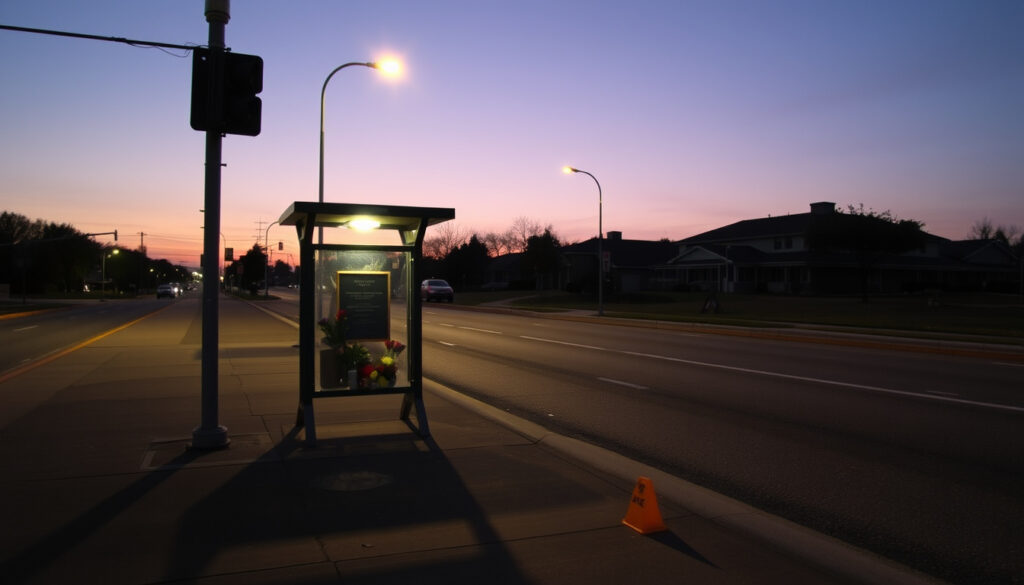
- On 22 April 1993 he was attacked while waiting at a bus stop in Eltham with his friend Duwayne Brooks (BBC News).
- The attackers shouted racial slurs before stabbing Stephen multiple times. A fatal wound to the heart killed him (De Montfort University Stephen Lawrence Research Centre).
How old would Stephen Lawrence be now?
Born 13 September 1974, he would have turned 51 in 2025. At the time of his death he was 18 years old and had aspirations of becoming an architect (UK Parliament Home Affairs Committee).
Did Stephen Lawrence have kids?
No. Stephen was a teenager with no children when he was killed.
What were Stephen Lawrence’s physical injuries?
He suffered multiple stab wounds. The most serious was a penetrating wound to the chest that severed the vena cava and reached his heart (De Montfort University Stephen Lawrence Research Centre).
Nearly 32 years on, the case still defines the UK’s conversation about race and justice. The Macpherson Report’s finding of institutional racism forced a police force to confront its own biases – but many argue the reforms have not gone far enough.
The pattern: a single night of violence turned into a national reckoning because the state’s initial failure to protect and investigate was laid bare in public.
How did the police respond to Stephen Lawrence’s death?
What was the Macpherson Inquiry?
- Established in July 1997 by Home Secretary Jack Straw (UK Parliament Hansard).
- First hearing took place in October 1997 (UK Parliament Home Affairs Committee).
- The report was published on 24 February 1999 (GOV.UK).
What were the key findings of the Macpherson Report?
The inquiry famously concluded that the Metropolitan Police was institutionally racist. This meant the force’s policies, practices, and culture systematically disadvantaged ethnic minority communities (The Guardian). The report also found that the initial investigation was marred by incompetence and a lack of urgency. It made 70 recommendations for change, many of which were adopted into law and police training.
The Metropolitan Police, the very institution found to be institutionally racist, was later responsible for reinvestigating the case. In 2006, a new review led to the forensic breakthrough that finally secured convictions.
The implication: the same institution that failed Stephen Lawrence in 1993 was ultimately the one that helped secure justice in 2012.
How long did it take for Stephen Lawrence’s killers to be convicted?
When were Gary Dobson and David Norris convicted?
- After a trial that began at the Old Bailey in November 2011, both men were found guilty on 3 January 2012 (BBC News).
- The verdict came 18 years after the murder (BBC News).
- They were sentenced to life imprisonment with minimum terms of 15 years and 14 years respectively.
What happened to the other suspects?
Three other white teenagers – Neil Acourt, Jamie Acourt, and Luke Knight – were arrested in 1993 but never charged due to insufficient evidence. A private prosecution in 1996 collapsed (Stephen Lawrence Day Foundation). The Crown Prosecution Service discontinued proceedings in July 1993 after a meeting with the senior investigating officer (The Independent).
What this means: the convictions exposed a two-decade pattern of missed opportunities and highlighted how much had to change before the state could convict.
Was anyone charged for Stephen Lawrence?
Who were the five original suspects?
- Neil Acourt, Jamie Acourt, Gary Dobson, Luke Knight, and David Norris (The Independent).
- All five were arrested in the weeks after the murder but released without charge in July 1993.
Why were only two convicted?
After the collapse of the private prosecution, the case went cold. It took new forensic technology in the mid‑2000s to link Gary Dobson’s clothing to Stephen’s blood. Neil Acourt, Jamie Acourt, and Luke Knight were never charged again. The Crown Prosecution Service maintained there was insufficient evidence for a realistic prospect of conviction.
The catch: forensic advances closed a case that traditional policing had left open for nearly two decades.
What happened to Stephen Lawrence’s mum?
Why does Doreen Lawrence have no hair?
Doreen Lawrence developed alopecia – a condition causing hair loss – as a direct result of the extreme stress from the case and her years of campaigning for justice (Stephen Lawrence Day Foundation). She has spoken publicly about losing her hair as a physical mark of the personal toll.
Is there a documentary about Stephen Lawrence?
Yes. The BBC aired Stephen: The Murder That Changed a Nation in 2020, a three‑part documentary examining the case and its legacy (BBC News). Additionally, the Netflix series The Murder of Stephen Lawrence (2020) provides another in‑depth look.
Doreen Lawrence turned unimaginable grief into a force for change. She was made a life peer in 2013 as Baroness Lawrence of Clarendon and continues to press for racial equality in education and policing.
The consequence: Doreen Lawrence’s campaign did not end with a conviction; it changed who holds power over police accountability and race equality.
Timeline: Key events in the Stephen Lawrence case
- – Stephen Lawrence born in Woolwich, London (Stephen Lawrence Day Foundation).
- – Stabbed to death in an unprovoked racist attack (BBC News).
- – Five suspects arrested but later released without charge (The Independent).
- – Private prosecution by Lawrence family fails (The Guardian).
- – Home Secretary announces public inquiry (UK Parliament Hansard).
- – Macpherson Report published; finds institutional racism (GOV.UK).
- – New police review launched (De Montfort University Stephen Lawrence Research Centre).
- – Trial of Dobson and Norris begins (BBC News).
- – Both convicted; sentenced to life (BBC News).
- – Doreen Lawrence appointed to House of Lords (Stephen Lawrence Day Foundation).
- – First official Stephen Lawrence Day (Stephen Lawrence Day Foundation).
- – BBC documentary Stephen: The Murder That Changed a Nation (BBC News).
- – David Norris denied parole; remains in prison (BBC News).
The pattern: each milestone moved the case from public grief to formal accountability, with the longest gaps marking the police and legal system’s resistance.
“The Metropolitan Police Service is institutionally racist. This is a profound and damaging finding.”
Macpherson Report, 24 February 1999
“Today, after 18 years of waiting, we feel that we can finally say justice has been done for Stephen.”
Doreen Lawrence, January 2012 (outside the Old Bailey)
The case continues to reverberate. In December 2025 the Parole Board denied David Norris’s release, a decision that reaffirms the lasting severity of his crime. The Home Affairs Committee has repeatedly called for continued oversight of police reform.
dmu.ac.uk, bbc.com, socialistworker.co.uk, en.wikipedia.org, assets.publishing.service.gov.uk, assets.publishing.service.gov.uk
Frequently asked questions
Who are Gary Dobson and David Norris?
The two men convicted of Stephen Lawrence’s murder in 2012. Both were part of a group of five white teenagers arrested shortly after the attack.
What is Stephen Lawrence Day?
An annual day of remembrance and reflection on 22 April, established in 2018, to honour Stephen’s life and promote anti‑racism.
How did Doreen Lawrence become a baroness?
She was appointed a life peer in 2013 for her services to community relations and justice, taking the title Baroness Lawrence of Clarendon.
Has the Metropolitan Police formally apologised?
Yes. Senior figures, including former Commissioner Sir Paul Condon and current leadership, have apologised for the failings in the original investigation.
What is the Stephen Lawrence Charitable Trust?
A foundation set up by the Lawrence family to support young people from disadvantaged backgrounds pursuing careers in architecture and other fields.
The pattern: the questions still asked about Stephen Lawrence are less about the crime than about whether institutions have learned from it.
- Bridget Phillipson: UK Education Secretary and Equalities Minister
- Darren Grimes Leaves GB News: His Political Rise and Future
The consequence: the Lawrence family’s campaign turned a murder into a national accountability mechanism, and the 2025 parole decision confirms that the case still carries legal weight.
More related posts
 DNA Test Cost and Accuracy in Ireland: A Guide
 Solid Snake: Canon Name, Voice Actors & Appearances
 Ilia Malinin: The Quadg0d’s Secret Life, Net Worth, and Olympic Journey
 Did Jamie Kill Katie? Adolescence Ending & Incel Twist
 Jojo Siwa: Fact-Checked Career Timeline and 2026 Name Change
 David Batty Now: Life After Football & Superbike Racing
 Theo James: Ethnicity, Wife, Prosthetic Nose and Rumors
 Steve Rosenberg BBC Russia Editor: Biography, Safety, Family
